

A forklift clips a stack of pallets and keeps going. A crane operator misjudges a swing and the load swings back. Nobody gets hurt, nobody reports it, and the same thing happens next month to someone else. That near-miss? It’s the cheapest safety data your civil site will ever get. But it only pays off if you trace it back to a real competency gap, like a blind spot, a control misunderstanding, or a habit, and feed it into refresher training for the whole crew. Sites with a strong safety culture don’t just talk about near-misses after a toolbox talk. They turn patterns into training content.
In this post, we’ll walk through why near-misses matter more than you think, what the regulator actually expects versus what you’re required to report, and a step-by-step process for capturing reports without blame, spotting patterns, tracing gaps, and building refresher training that sticks. We’ll also share worked examples across common plant and show where structured, hands-on training fits in. Whether you’ve been meaning to tighten up your process or just want a practical system, this is for you. We’ll also show where A2B Training, an established RTO with hands-on, practical training six days a week, fits in.
Why a Near-Miss Is the Cheapest Safety Data on Your Site
A near-miss is an event that could have caused harm but didn’t. Many near-misses don’t trigger a reporting obligation, but some plant events with no injury, such as overturning or collapse of lifting equipment, are still notifiable under WHS law. Check your regulator’s dangerous-occurrence categories. That’s a practical working definition, not a legal one.
The admin burden of a near-miss report is minimal. A serious incident means downtime, investigation and disrupted crews.
Here’s the hook: a near-miss is free information about a gap in how your crew works. It’s only free if you actually use it. Most sites mention it in the crib room and move on.
The report is the input. The training change is the output. Plenty of sites collect the input and never produce the output.
You probably already verify site compliance for heavy equipment operators before mobilisation. This is the next layer. Trace the near-miss to a specific competency gap, then feed it back into refresher training for the whole crew.
Notifiable Incidents vs Near-Misses: What the Regulator Actually Expects
Before we get into the loop, sort out the terminology. Under the Safe Work Australia incident notification fact sheet, a notifiable incident is the death of a person, a serious injury or illness, or a dangerous incident. Report it immediately, send written notification within 48 hours if the regulator asks, and preserve the site until an inspector arrives or directs otherwise.
WA runs the same framework: the WorkSafe WA interpretive guideline (February 2023) applies it to all WA workplaces and adds a work-related test. Check for updates before relying on it.
Who counts? Workers, contractors and members of the public. Check the full Act and regulations for psychological harm, the research basis differs from physical injury. Failing to notify is an offence and penalties apply.
Now the bit supervisors miss: a near-miss is not a notifiable incident. It’s voluntary, internal, and doesn’t go to the regulator. That means the loop from near-miss to training is entirely yours to build. It’s also why the training you book matters, and it’s worth knowing what “nationally recognised” really means on a construction site before you plan refreshers.
Safety Culture Is What Your Site Does With a Near-Miss After the Toolbox Talk
Culture shows up right there: if the first question after a near-miss is “whose fault was that?”, reporting quietly stops and you lose the data. Regulators can use notification data to help identify causes and prevent similar incidents at other workplaces. If that’s possible at a system level, your site can share lessons across crews.
Hazard identification and reporting are the same muscle. A crew sharp at spotting hazards early writes better near-miss reports, because they notice the thing that nearly went wrong. Formal hazard identification training builds exactly that. Hazard identification on civil construction sites is a trained competency, not something operators pick up on the job.
Watch for reports clustering on one machine, one shift or one task. That pattern is worth investigating for a system or training gap rather than assuming one careless operator.
Bottom line: safety culture on a civil site is not a poster on the wall. It is whether a near-miss changes anything the next morning.
Step 1: Capture the Near-Miss Without Blame
The following form design and process are recommended practice, not a regulatory standard.
The first move is the form itself. Keep it to one page and make it phone friendly, because nobody wants to fill out a novel on a break. Ask for plant type, task, location, what happened, and what stopped it getting worse. Then add this question: what did you expect to happen versus what actually happened? The gap between those two answers is a useful place to look for the competency gap.
Ban blame language outright. Words like careless or should have known push the useful detail straight out of the report, because people start writing for the file instead of for the truth.
Close the loop visibly. If a crew reports a near-miss and hears nothing back, they stop reporting. Tell them what changed because of their report. Set a simple rhythm, like every report reviewed within the week with no report left unanswered. Low friction plus visible response beats a long form nobody fills in. This is step one of a loop that eventually becomes a crew-wide training plan, which is exactly what our guide to building a multi-ticket training plan for a civil construction crew in Perth covers.
Step 2: Pattern the Reports Against Your Hazard Types
Once your reports are coming in, you need to actually do something with them. Hazard identification on a civil site is about spotting the controls that keep failing, not just logging one-off events. So group your near-misses by hazard category, and the repeats will jump out at you.
Pick categories that match your work: struck by, crush, tip over, overhead and electrical, falls, poor visibility, and ground conditions. Then look for repeats within a set review period, 90 days is a practical starting point, on the same plant type or task. (This is a suggested internal rhythm, not a regulatory requirement.) That repetition is your signal that training, not luck, is the gap. It is also worth checking your site compliance for heavy equipment operators so you know what competency evidence already exists before you plan anything new.
Cross-read reports from different crews too. A hazard one crew calls out is often a blind spot in a crew that never reports it. And keep the analysis to what the reports actually say. No padded incident rates or made-up statistics, because a number you cannot verify undermines the whole exercise.
Next, you need to trace what you have found back to the competency gap behind it.
Step 3: Trace the Near-Miss to One of Three Competency Gaps
Once the reports are grouped, the real work starts. Most plant near-misses trace back to one of three things, and sorting the report into the right box is what turns it into training content.
Blind spot: the operator didn’t know the hazard existed in that position, task or ground condition. Fix it with hazard identification training and supervised exposure to the situation. Control misunderstanding: they knew the hazard but not which control applied, or not why the machine’s limits exist. Fix it with equipment controls training, backed by solid pre-start checks. Habit: they knew the right control but defaulted to a shortcut under time pressure. Fix that with coaching on site, not more classroom time.
Be honest about this method: it’s a practical way of reading a near-miss, not a regulatory requirement or a researched standard. Treat it as a recommended approach.
And test your trace before moving on. If your conclusion is that they should have known better, you haven’t found the gap yet. That’s a judgement, not a diagnosis. Keep digging until you can name the specific gap, because that’s the only thing you can actually train.
Step 4: Turn the Gap Into Refresher Training for the Whole Crew
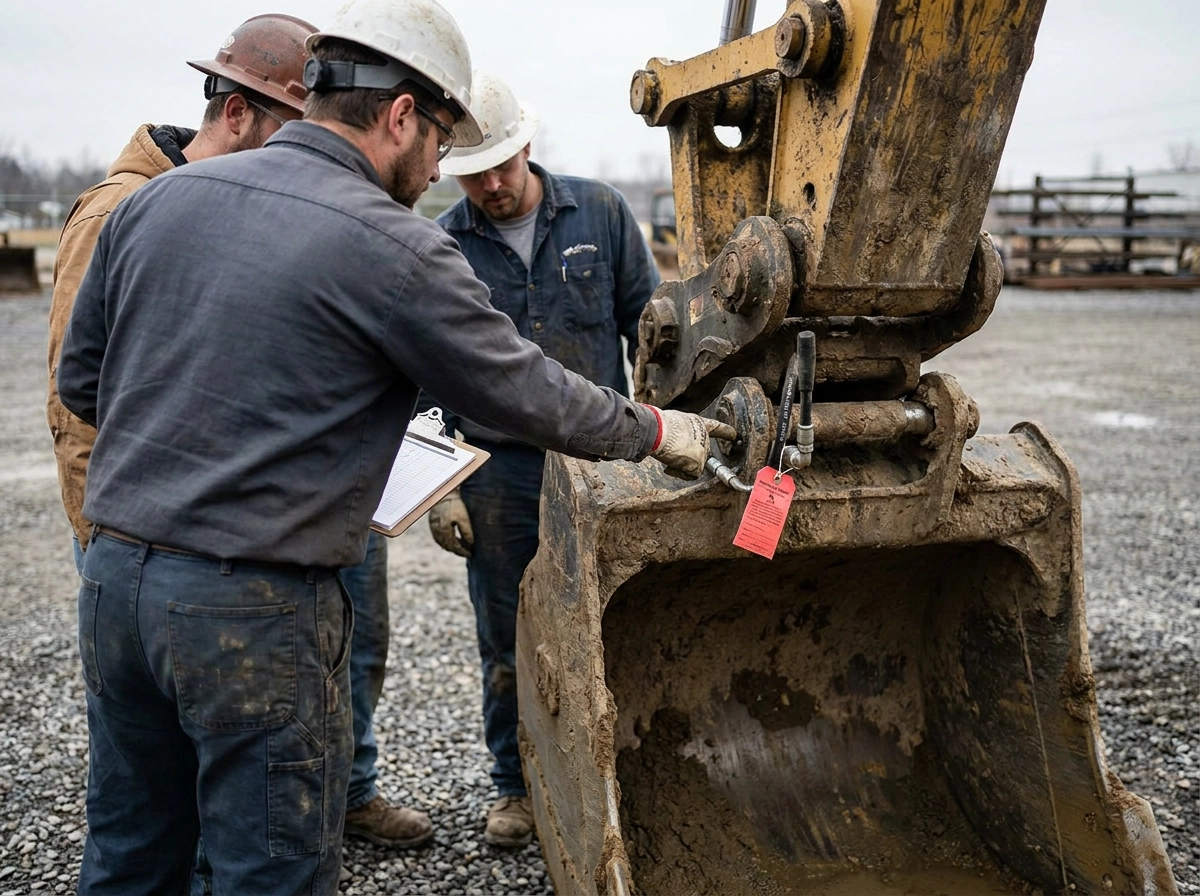
Once you’ve named the gap, don’t just coach the operator who was in the seat. A near-miss on one machine usually exposes a gap shared by everyone who runs it, so refresh the whole crew.
Rework the actual event into a short scenario using the same plant, task and ground conditions. Use your own report as the material, not a generic case study. Deliver it where it sticks: at the pre-start, next to the machine, or in a practical session. A stand-alone slide deck rarely changes what happens in the seat.
Track who has been through refresher on which gap, then repeat the loop with the next report. Over a year that becomes a training program built from your own site. And don’t overcorrect. Targeted refresher on a real gap is more likely to land than annual retraining spread across everything. If the gap points to a ticket or competency question, it’s worth knowing what ‘nationally recognised’ really means on a construction site before you book.
Worked Examples Across Common Plant
Here’s how that loop looks on common plant. These are illustrations of how to trace a report, not incident data. Your real material is sitting in your own near-miss system.
- Excavator: the swing path came within a metre of a spotter. Ask whether the operator missed the spotter (blind spot) or skipped the exclusion zone out of habit. Refresh the crew on swing radius, exclusion zones and spotter communication.
- Wheel loader: an unstable stockpile or a pedestrian in the load path. Trace it as a control misunderstanding or blind spot, then refresh on load limits, travel routes and separation. This practical loader guide is a handy follow-up.
- Telehandler: a shifting lifted load or poor ground under a stabiliser. Sort it as blind spot or habit, then refresh pre-operational checks, ground assessment and load chart reading.
- Haul truck: a near-miss at a dump point or on a wet haul route. Trace it as a habit around speed and spacing, then refresh haul road rules and defensive positioning.
Run each example through your own reports before turning it into training.
Where Structured, Hands-On Training Fits In
Those examples show the tracing, but tracing alone doesn’t fix anything. Some gaps are habits you can coach out on site with a toolbox talk and a shadow shift. Others are genuine competency gaps that need structured, assessed training with a competent trainer.
That’s where A2B Training fits. They’re a nationally recognised RTO conveniently based in Maddington, WA, and they’ve been established a long time, working with individuals and crews across civil construction and heavy equipment. Their training is hands-on and practical, covering safety, pre-operational checks, hazard identification and equipment controls, delivered by knowledgeable trainers and assessors at the Perth facility.
The practical detail matters. They run six days a week, which lines up with rosters, shutdowns and weekend windows when you can actually free up a crew. Combo deals and value for money make it realistic to put more than one operator through at a time, which is exactly what your whole crew refresher depends on. And nationally recognised RII tickets cover the plant your site runs.
What to Do With Your Next Near-Miss
Whichever route you take on the training front, the real test starts with one report. This week, pick a single near-miss from the last month and run it all the way through the loop. One finished loop teaches your crew more than another reporting form ever will.
Ask the expected versus actual question and use the answer, as covered in Step 1, to sort the gap into one of the three categories from Step 3. Trace it, then write the refresher in one paragraph before you deliver it. Keep it plain and specific to the plant, task and ground conditions.
Refresh everyone who runs that plant, not just the operator involved, and record who has been through it. Then close the loop by telling the crew what changed because they reported. That is what keeps the near-miss data coming, and it is one of the most cost-effective training improvements you can make.
Conclusion
Near-miss data is only as good as the action that follows it. Build the loop once, run it after every report, and the training builds itself from the ground up.