

Before you fire up any piece of heavy plant on a construction site, there is one thing that has to happen first. Pre-start checks are not a suggestion. They are a documented requirement under Australian workplace health and safety law, and skipping them puts you, your crew, and your certification at serious risk.
In this guide, we are going to walk you through exactly what pre-start checks involve, what the law actually requires from operators, how to document inspections properly, and what can go wrong when these steps get rushed or ignored. We will also show you how A2B Training builds these skills directly into your RII ticket so you are ready to get it right from day one.
Why Pre-Start Checks Are Not Optional on a Construction Site
If you’re working on a civil construction site in Australia, conducting a pre-start inspection before you touch the controls isn’t a suggestion, it’s a legal requirement. Under Australia’s Work Health and Safety framework, operators and employers have a documented duty to identify and control hazards associated with plant and equipment before it’s operated. That obligation doesn’t disappear when you’re running late or the machine looks fine.
Safe Work Australia identifies plant and machinery as a core construction hazard requiring systematic management. That means a proper inspection before every shift, not just when something seems off. Here in WA, WorkSafe WA reinforces this with checklist guidance that sets clear expectations for how equipment inspection regimes should run on site.
Undetected mechanical defects and unsafe equipment conditions are a genuine risk on construction sites. A hydraulic hose that was chafing yesterday, a tyre losing pressure overnight, a warning light nobody noticed, these are the kinds of faults a proper pre-start check is designed to catch before they cause a problem.
Operators and employers share this responsibility. If a check is skipped or rushed and something goes wrong, both parties carry a duty under the WHS framework. It’s a shared obligation across the site, not something one person owns.
What Australian WHS Law Actually Requires From Operators
So what does the law actually spell out? Under Safe Work Australia’s duties framework, both operators and employers are required to systematically identify and control hazards associated with plant and machinery before operation. That is not a vague guideline, it is a defined duty, and it applies on every civil construction site in the country.
Best practice, and what most site safety management plans require, is a pre-start inspection before every shift.
Beyond that, additional checks are also warranted when:
- Equipment has been moved or relocated on site
- A machine has sat idle for an extended period
- The machine is being handed over between shift changes
These extra checks take only a few minutes but cover the gaps where things can change without anyone noticing.
Documented records are considered best practice and, under most site safety frameworks, a due-diligence requirement, meaning regulators and site auditors may request them at any time. A verbal check or a quick look around the machine does not satisfy this requirement.
Documentation is also how operators and employers demonstrate due diligence if something goes wrong. Without a paper trail, it is very difficult to show that the hazard was assessed and managed correctly.
A checklist that will hold up under scrutiny should capture at minimum the items set out in the documentation section below, which covers exactly what each record needs to contain.
The Core Pre-Start Check Categories for Heavy Plant and Equipment
So now you know what the rules say, here’s what they actually look like in practice. Every pre-start inspection covers the same core categories, regardless of which machine you’re jumping on.
Fluid Levels
Check engine oil, hydraulic fluid, coolant, diesel, and brake fluid visually before every start. Low or contaminated fluids are one of the most common causes of mechanical failure mid-shift, and they take about two minutes to check.
Tyres and Tracks
On wheeled plant, look for correct tyre inflation, cuts, bulges, embedded debris, and loose wheel nuts. On tracked machines like excavators, check track tension, wear, and any missing track shoes. A damaged track on a machine mid-job is an expensive problem that a 60-second walk-around would have caught.
Hydraulic Systems
Inspect hoses, fittings, and cylinders for leaks, chafing, or damage. Hydraulic system faults on excavators and wheel loaders pose a serious risk of uncontrolled movement.
Operator Controls and Safety Systems
Before you move the machine, test the horn, lights, reversing alarm, seat belt, ROPS/FOPS integrity, and fire extinguisher charge. Run through all joystick and pedal responses to confirm everything is responding correctly.
Structural and Visual Walk-Around
Look for cracks, loose bolts, damaged guards, and oil pooling under the machine. Also check for any impact damage that might have happened during the previous shift and wasn’t reported.
Equipment-Specific Checks
Some machines need extra attention. Excavators require close inspection of the boom, stick, and bucket assembly including pins and wear components. Wheel loaders need the articulation joint and tipping hitch area checked carefully. Telehandlers require attention to the boom extension mechanism and confirmation that a legible load chart is present in the cab. Watercarts need tank integrity and spray system confirmation.
Structuring your plant and equipment pre-start checklist around these categories means nothing gets skipped when the morning is busy and everyone is keen to get moving.

Quick Reference: Pre-Start Checklist Points by Machine Type
Here’s a quick breakdown by machine so you can see exactly what each pre-start inspection checklist covers.
Excavator Engine oil, hydraulic fluid, coolant, fuel level, boom/stick/bucket pins and bushes, bucket teeth and cutting edge, slew ring, track condition and tension, cab glass, all controls and alarms, fire extinguisher.
Wheel Loader Fluid levels, tyres and wheel nuts, articulation joint lock, tipping hitch and quick coupler, boom and bucket cylinders, lights, horn, reversing alarm, cab safety equipment.
Telehandler (Telescopic Handler) Fluid levels, tyre condition and pressure, boom extension mechanism, load chart present in cab and legible, fork or attachment security, outriggers if fitted, all controls and alarms.
Roller Fluid levels, drum condition and scrapers, vibration system engagement, steering and brake response, lights and alarms, water system condition if used for compaction.
Skid Steer, Rigid Haul Truck and Articulated Haul Truck These machines follow the same core framework above, adjusted for their specific hydraulic layout and load-carrying function. A skid steer operator focuses more on the lift arm and auxiliary hydraulics; haul truck operators add attention to tray condition, load restraints, and brake system checks.
Using a consistent plant and equipment pre-start checklist format across your whole fleet makes life easier in two ways. First, operators moving between machines already understand the structure, so training is transferable. Second, your audit records follow a uniform format, which is much simpler to manage when WorkSafe comes knocking.
How to Document Pre-Start Inspections So They Actually Hold Up
Knowing what to check is only half the job. If you don’t record it properly, the inspection may as well not have happened from a compliance standpoint.
A verbal check doesn’t count. A checklist that isn’t signed, dated, and kept on file won’t hold up if WorkSafe comes knocking or an incident occurs. The record is the proof.
Paper checklists are still perfectly acceptable on most sites, but they need a proper home. Loose sheets stuffed in a cab or tossed at the end of a shift are a liability. They need to be filed systematically and retrievable for audit at any point.
More sites are moving to digital pre-start recording, and it’s easy to see why. Digital systems auto time-stamp every entry, generate audit-ready reports, and let supervisors check inspection status across the fleet in real time. Defects get flagged immediately so maintenance can act before the machine is even started, not after something goes wrong mid-shift.
Regardless of whether you’re using paper or an app, every record must include:
- Operator name
- Date and time
- Plant ID or registration number
- Each checklist item with a pass or fail notation
- A description of any defect found
- Action taken, whether that’s repaired, reported to a supervisor, or removed from service
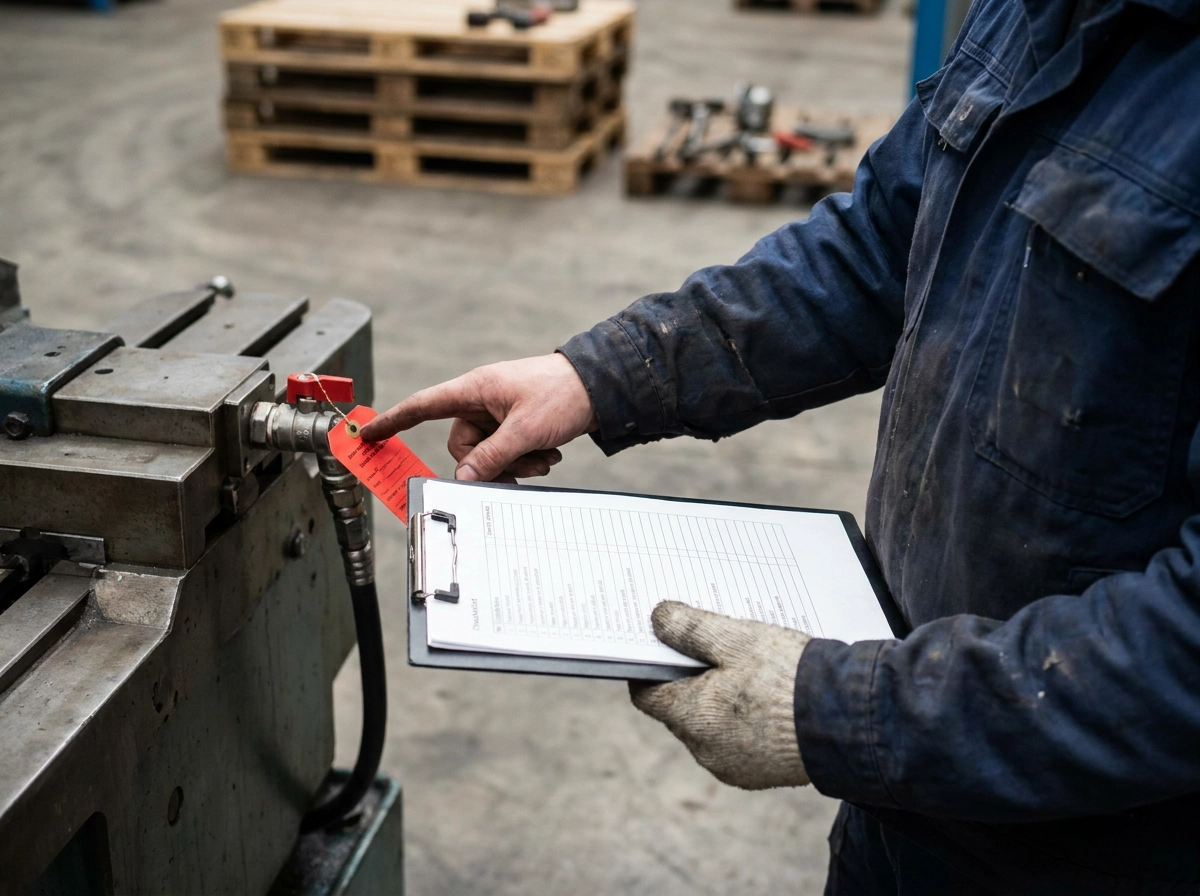
That last point matters. If you find a defect, the machine gets tagged out and stays out of service until it’s fixed. Operating equipment with a known fault is a serious WHS breach, and “I didn’t have time to report it” is not a defence that works.
What Actually Happens When Pre-Start Checks Are Skipped
So what actually goes wrong when a pre-start gets skipped or rushed? Quite a lot, as it turns out.
The most immediate risk is straightforward: a pre-start check is the only scheduled opportunity to catch a developing fault before it causes a breakdown or a serious injury on site. Skip it, and that window is gone. A loose hydraulic fitting, low fluid, or worn track shoe that would have taken five minutes to identify can turn into an unplanned shutdown or something far worse mid-shift.
From a compliance standpoint, the stakes are just as real. WorkSafe WA maintains a checklists resource as part of its regulatory framework, and documented inspection records are the clearest evidence an operator and employer can provide that hazards were identified and managed. Without that paper trail, demonstrating compliance becomes significantly harder if an incident is investigated.
It’s worth being clear on who wears that risk. Operators who can’t produce evidence of compliance risk having their competency and site authorisation questioned, regardless of their experience level or how long they’ve been in the industry. Employers fare no better; without a documented pre-start system, they can’t demonstrate the hazard was identified and managed, which significantly increases their liability if something goes wrong.
Beyond the legal exposure, there’s a practical cost that compounds quietly over time. Equipment that misses regular inspections accumulates undetected wear. Minor faults become major ones, and the result is exactly what no site supervisor wants: costly mid-shift breakdowns and unplanned downtime that disrupts the whole project.
How A2B Training Builds Pre-Start Skills Into Your RII Ticket
So, knowing what’s at risk if you skip pre-starts is one thing. Actually knowing how to do them properly is another. That’s where the right training makes a real difference.
A2B Training is a registered RTO that’s been delivering nationally recognised heavy equipment training in Perth for a long time. Pre-start procedures aren’t tucked away as an afterthought in their courses; they’re a core assessable skill that every student has to demonstrate before they can tick off their unit.
That applies across the board. Whether you’re working toward your wheel loader ticket (RIIMPO321F), telehandler, roller, haul truck, watercart, skid steer, or excavator, your practical assessment includes completing a competent pre-start inspection on the actual machine. You don’t pass by describing it; you do it.
Multiple ticket combinations are available, check with A2B Training for current options and availability.
A few other things worth knowing:
- Courses run six days a week, so you can fit training around your roster without losing a full week of pay
- You finish the course already knowing what to check, how to fill out the record, and what to do when you find a fault
That’s not something you want to be figuring out on the job.
Get Your Pre-Start Checks Right Every Time
So here’s the bottom line: pre-start checks are a legal requirement, a genuine safety measure, and a skill every competent operator needs to own.
Before every shift, run through your structured checklist. Cover fluids, tyres or tracks, hydraulics, controls, safety systems, and a full walk-around. Don’t shortcut it under time pressure; that’s exactly when something gets missed.
A2B Training runs courses six days a week at their Maddington facility, get in touch to check availability and get started.
Conclusion
Pre-start checks are not a box-ticking exercise. They are what separates a competent, professional operator from one who is a liability on site.
The key takeaways are simple: pre-start checks are legally required under Australian WHS law, they prevent breakdowns and serious injuries, proper documentation protects you and your employer, and the skill must be practiced consistently to become second nature.
If you are just starting out or adding machines to your licence, build these habits from day one with training that takes them seriously. A2B Training’s RII courses embed pre-start procedures as a practical, assessable skill, contact them to get started.
Do not wait for an incident to remind you why this matters. Run the checklist, document the inspection, and operate with confidence. Contact A2B Training today and get your certification started the right way.