

Booking haul truck training sounds straightforward until you realise the ticket your operator walks away with might not actually cover the machine they’re about to climb into. It’s a mistake that costs more than just money.
Here’s the thing: a rigid haul truck and an articulated haul truck are not interchangeable, and neither are their qualifications. Under Australia’s national training framework, RIIMPO338E (rigid) and RIIMPO337E (articulated) are two separate units of competency. An operator holding one is not automatically qualified for the other. If your site runs articulated haul trucks and your crew only holds a rigid ticket, you’ve got a compliance gap sitting right there on the ground.
This post is built for employers, site managers, and training coordinators who need to get this decision right before they book. We’ll break down what actually separates these two machines, what each unit covers, how to figure out which articulated haul truck ticket or rigid equivalent your site genuinely needs, and what the compliance picture looks like across different states. By the end, you’ll have enough to make a confident, informed call.
Two Trucks, Two Tickets, One Costly Mistake
If you’ve ever booked haul truck training and just assumed a ticket is a ticket, you’re not alone, but it’s a costly assumption.
RIIMPO338E (rigid haul truck) and RIIMPO337E (articulated haul truck) are two completely separate units of competency under the Australian national training framework. An operator certified on one is not qualified to operate the other. Full stop. The RII framework was deliberately structured this way to reflect the genuinely different operational demands of each vehicle type across civil construction, mining, and extractive industries.
For employers, site supervisors, and project managers, this distinction matters before you book training, not after. Book the wrong unit and you’ve got a real compliance gap on site. That’s not a paperwork issue, it sits squarely in WHS duty-of-care territory, and the exposure lands with the employer.
One more thing worth flagging if you’re working from older records: the current rigid haul truck unit is RIIMPO338E, which superseded the previous version, RIIMPO338D, on 10 December 2018. If your training documentation still references the old code, it’s worth updating those records now.
This guide is written for the people making the booking decision. By the end, you’ll know exactly which ticket your site needs and why getting it right the first time is far cheaper than fixing it later.
What Actually Makes These Two Trucks Different?
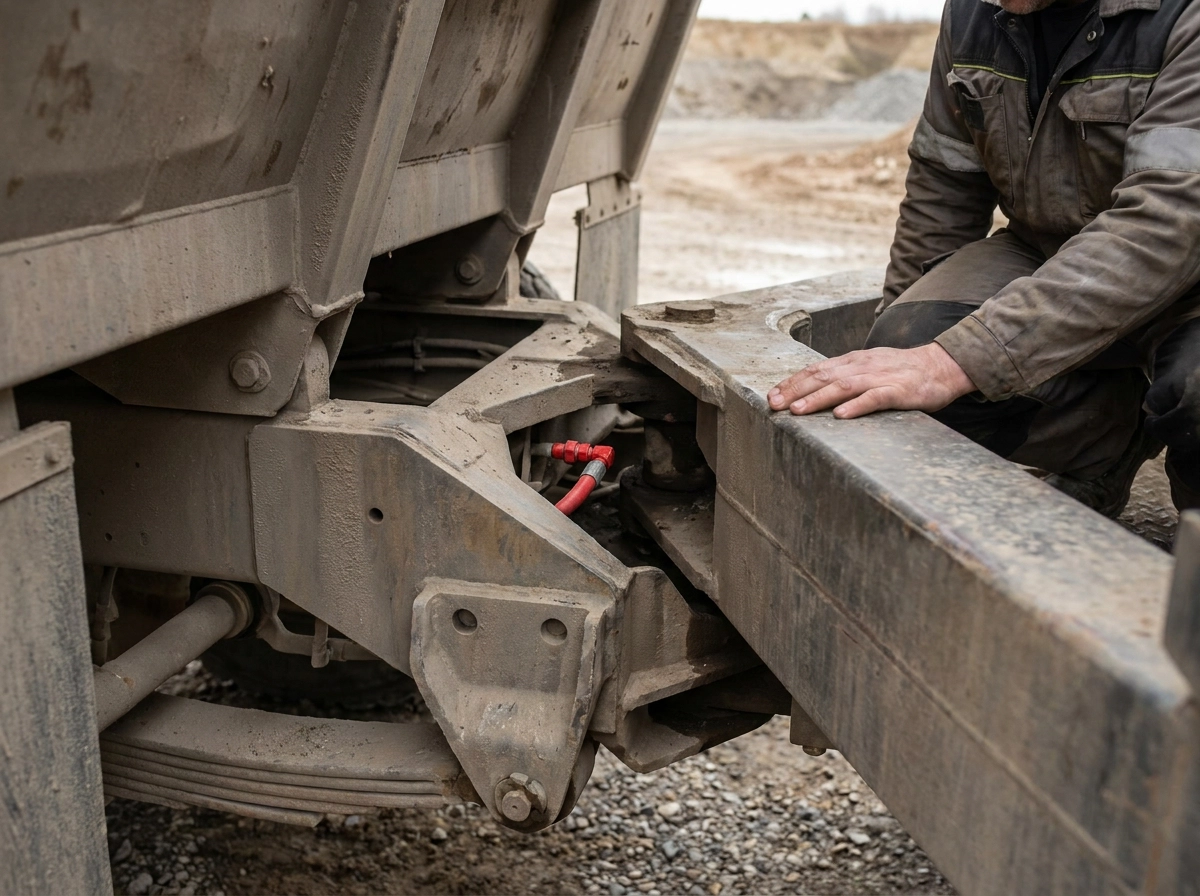
The difference comes down to one fundamental design choice: whether the chassis bends or stays rigid.
A rigid haul truck is built as a single, fixed frame. The front and rear move together as one unit, which gives it exceptional stability under massive payloads. The trade-off is manoeuvrability. On uneven ground, soft underfoot conditions, or sites with tight turning requirements, that fixed chassis becomes a genuine limitation.
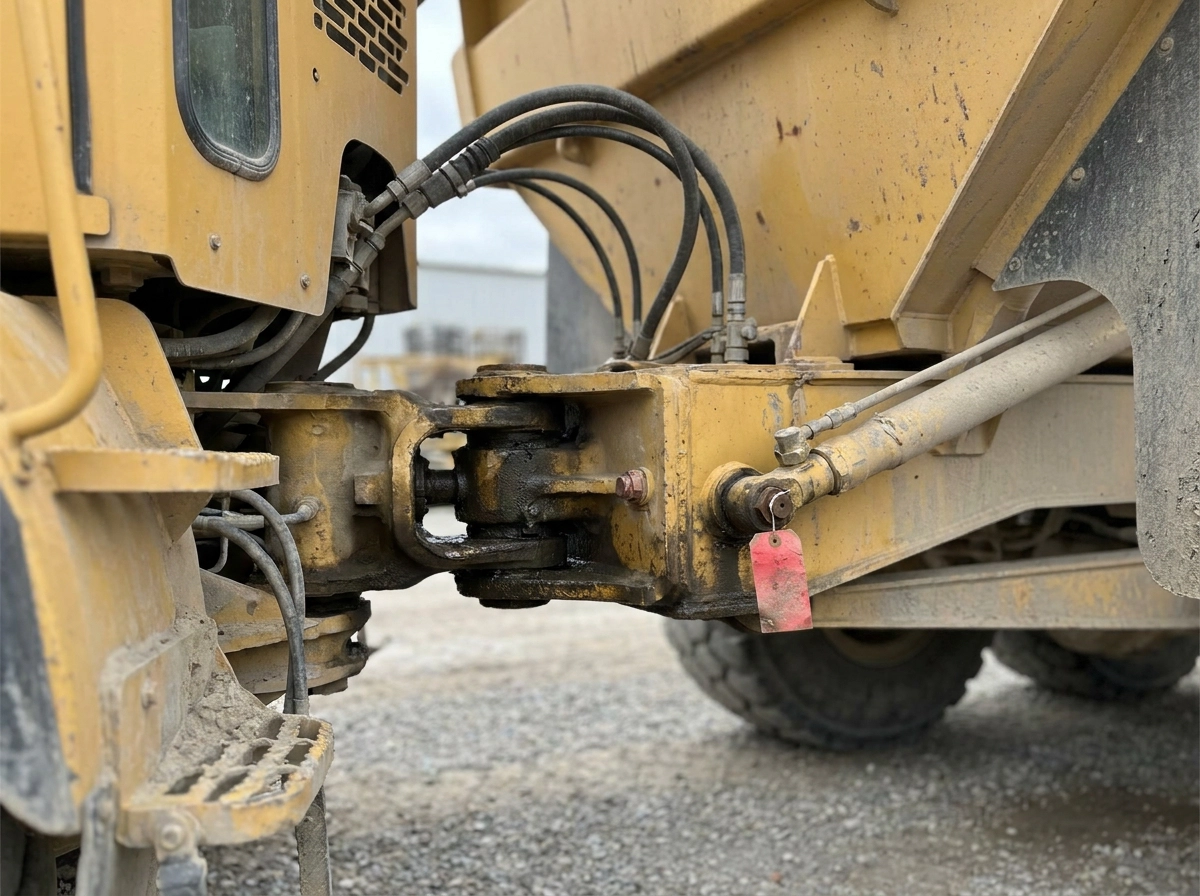
An articulated haul truck has a pivot joint between the cab and the dump body. Those two sections flex independently, which is exactly what you want on steep grades, soft terrain, or construction sites where the ground conditions change constantly. The articulation is what gives these trucks their reputation on civil and road-building jobs.
The size and application gap is significant too. Rigid trucks run larger payloads and dominate open-cut mining operations where haul roads are purpose-built, well-maintained, and long. Articulated trucks are the default choice for civil construction, subdivision work, and any site where the footprint is tighter or conditions underfoot are variable.
Here’s the part that matters most for training purposes: these mechanical differences flow directly into how the machines are operated. Pre-start checks, load and haul procedures, dump technique, and how the operator manages the vehicle under load are all shaped by which chassis type they’re sitting in. That’s not incidental. It’s precisely why the RII framework created two separate units rather than one generic haul truck ticket, and why RIIMPO337E Conduct Articulated haul truck operations and RIIMPO338E are assessed against entirely different performance criteria.
What RIIMPO338E and RIIMPO337E Actually Cover
Those mechanical differences translate directly into how the two units are structured as training qualifications, and that’s where the compliance stakes get real.
RIIMPO338E focuses on what rigid chassis operation actually demands: pre-start checks specific to a fixed-frame truck, load/haul/dump procedures that account for rigid vehicle geometry, and post-operational maintenance relevant to that platform. Everything in the unit is built around the characteristics of a truck that moves as one piece.
RIIMPO337E covers different ground entirely. Articulated operation introduces competencies that simply don’t exist on a rigid truck: coupling and uncoupling procedures, managing weight distribution across the pivot joint, and handling techniques specific to an articulated chassis under load. These aren’t minor variations on the same skill set.
Both units do share some common territory, including hazard identification, site communication, and safety requirements. But that overlap doesn’t make them interchangeable. The operational content is vehicle-specific, and you can’t assume competency in one carries across to the other.
That matters practically because completing RIIMPO338E gives an operator zero partial credit toward RIIMPO337E, and vice versa. They’re assessed separately against different performance criteria under the national framework. There’s no combined haul truck ticket that covers both vehicle types, and there’s currently no pathway for recognition of prior learning from one unit to the other.
If your site runs both truck types, your operators need both tickets. If you need the articulated side covered, RIIMPO337E Conduct Articulated haul truck operations is available at A2B for $645.
How to Work Out Which Ticket Your Site Actually Needs
Start with the equipment itself. Fixed chassis with no pivot point between cab and body? That’s a rigid haul truck: RIIMPO338E. Pivot joint in the middle where cab and dump body articulate independently? That’s RIIMPO337E. If you’re unsure, check manufacturer specs or ask your plant hire provider before booking.
Look at your haul road conditions. Long, well-engineered haul roads on large open-cut sites are typically set up for rigid trucks. Softer ground, variable terrain, or shorter haul cycles almost always favour articulated trucks operationally.
Consider your site footprint. Articulated trucks handle tighter turning environments far better than rigids, which is why civil construction, subdivision work, and road building tend to run articulated fleets. Space constraints are a strong signal pointing toward RIIMPO337E.
Mixed fleet? Both tickets are required. You can’t assign an operator certified only in RIIMPO337E to a rigid haul truck. Each machine type needs its corresponding ticket. This is the same logic that applies to other equipment decisions in the RII framework, like choosing between excavator tickets.
A2B Training delivers both RIIMPO338E and RIIMPO337E, and their trainers have been doing this long enough to give you a straight answer. If you’re still not certain which ticket fits your setup, call them before you book.
The Compliance Side: State Rules Aren’t All the Same
Once you’ve worked out which ticket matches the equipment on your site, there’s another layer worth checking before you book anything.
An RII ticket is the legal baseline for operating heavy plant in Australia, but the national unit alone doesn’t always cover everything. The training.gov.au unit descriptor for RIIMPO337E states directly that licensing, legislative, and regulatory requirements “can vary between states, territories, and industry sectors, and must be sourced from state jurisdictions prior to applying this unit.” That applies equally to RIIMPO338E.
In plain terms: a nationally recognised competency is the foundation, not the full picture. What satisfies compliance in WA may not be sufficient in QLD or NSW, and operators moving between jurisdictions can land employers in a gap if no one checked first. WA’s resources and construction sectors have their own licensing frameworks that can sit alongside the RII unit, meaning operators may need to satisfy both.
There’s also a WHS angle that sits squarely with the employer. If a worker is assigned a machine they’re not certified for, that’s a foreseeable risk under work health and safety legislation. “We didn’t know the units were different” won’t hold up if something goes wrong.
This is part of the reason working with an established RTO like A2B Training matters. Before you spend anything, their team can help you work out what actually applies to your site, sector, and state.
What Booking the Wrong Haul Truck Training Actually Costs You
Beyond the compliance question, there’s a straightforward financial case for getting this right before you book.
The direct cost is simple: if an operator completes the wrong unit, they cannot legally operate the other truck type on site. There is no partial credit, no bridging shortcut. You’re paying for an entirely new course from scratch.
The indirect costs are where it gets painful. Plant hire doesn’t stop accumulating because your operator holds the wrong ticket. Project timelines don’t flex because you need to rebook training. If the wrong course puts you behind on critical-path earthworks, the bill compounds fast.
The legal exposure is more serious still. Under WHS duties as defined by Safe Work Australia, employers are required to ensure workers are genuinely competent to operate the specific equipment they’re assigned to. If an incident occurs and an investigation reveals the operator held the wrong ticket for that machine, “we didn’t realise the units were different” carries no weight as a defence. The obligation to verify sits with the employer, full stop.
Insurance is worth a thought too. Operating outside the scope of a worker’s certified competency may affect the validity of a workers’ compensation or public liability claim, depending on how the incident is assessed.
The fix costs almost nothing by comparison: identify the truck, check the unit code, and book the right haul truck ticket the first time.
Rigid vs Articulated Haul Truck: Side-by-Side Snapshot
Here’s a quick reference to cut through any remaining uncertainty.
| Factor | Rigid Haul Truck | Articulated Haul Truck |
|---|---|---|
| RII Unit Code | RIIMPO338E | RIIMPO337E |
| Chassis Type | Fixed/rigid frame | Pivot-jointed frame |
| Typical Environment | Engineered haul roads, large open-cut mines, bulk earthworks | Civil construction, soft ground, variable terrain, tighter turning radius |
| Industry Application | Civil construction, coal mining, metalliferous mining, extractive | Civil construction, coal mining, metalliferous mining, extractive |
| Interchangeable? | No | No |
A few things worth pulling out of that table:
The unit code on the Statement of Attainment is your compliance check. If it says RIIMPO338E, that operator is certified for a rigid truck. If it says RIIMPO337E, that’s an articulated truck only. Code doesn’t match the machine on site, you’ve got a gap.
Chassis type is the fastest way to identify which ticket applies. Rigid frame means RIIMPO338E. Pivot joint between cab and body means RIIMPO337E. That single physical feature determines everything.
Industry doesn’t determine the unit, the vehicle does. Both units span civil construction, coal mining, metalliferous mining, and extractive industries. What matters is what’s actually running on your site.
Mixed fleet means both tickets. There is no shortcut or combined qualification. For operators working across both truck types, you can check out the RIIMPO338E Conduct rigid haul truck operations course priced at $645 as a starting point, and pair it with RIIMPO337E for full coverage.
Getting Your Haul Truck Operators Trained at A2B
Once you know which unit applies to your site, the next step is finding an RTO that actually delivers both, not just one.
A2B Training is a nationally recognised RTO that has been delivering RII training in Perth for a long time. Their haul truck courses cover both RIIMPO338E (rigid) and RIIMPO337E (articulated), so you’re working with a provider that understands the difference and can train your operators correctly regardless of your fleet.
Training is hands-on and practical, using real equipment. Assessment is competency-based, meaning your operators are evaluated on their ability to actually do the job. It’s not a theory session with a tick-box at the end. A solid part of that practical foundation includes knowing your machine inside out before you even fire it up, which is why understanding what operators must inspect, record, and verify before every shift matters as much as operating technique.
Courses run six days a week at A2B’s Maddington facility, which gives employers genuine flexibility when working around site rosters and project timelines.
If you’ve got multiple operators needing different tickets, A2B’s combo deals are worth considering. Getting RIIMPO338E and RIIMPO337E sorted together is typically more cost-effective than booking separately at different times.
And if you’re still not certain which ticket applies to your site, call A2B before you book. Their trainers can give you a straight answer based on your actual setup.
The Bottom Line Before You Book
Here’s the short version before you commit to anything.
Look at the trucks on your site. Fixed chassis? That’s RIIMPO338E. Pivot joint between the cab and body? That’s RIIMPO337E. Running both types? Your operators need both tickets, full stop.
Don’t assume a ticket from one unit covers the other. It doesn’t, and the national training framework is explicit on that point. If something goes wrong on site and your operator holds the wrong ticket for the machine they were on, that compliance gap sits with you as the employer, not the training provider.
Before you finalise your training plan, check the requirements for your state and sector. Licensing and regulatory obligations can vary between jurisdictions, so WA requirements may not mirror what’s needed in QLD or NSW. Verify first, book second.
When you do book, use an RTO that holds current accreditation for both haul truck units and can actually talk you through the decision before you spend money. That pre-booking conversation is worth more than most people realise.
A2B Training is a long-established RTO based in Maddington, Perth, offering both RIIMPO338E and RIIMPO337E with hands-on, practical training six days a week. If you’re not completely sure which unit applies to your site, call them before you book. Their team can help you confirm the right ticket for your fleet and your situation. Getting it right upfront is a lot cheaper than fixing it later.
Conclusion
Choosing between a rigid and articulated haul truck ticket is not guesswork; it comes down to the machines on your site and the units that legally cover them. RIIMPO338E and RIIMPO337E are not interchangeable, and assuming otherwise creates real compliance exposure for employers.
The key takeaways are straightforward. Know your equipment before you book. Understand that state and sector requirements can differ. Confirm your RTO holds current accreditation for both units. And never send an operator onto a machine they are not ticketed for.
Getting this right upfront protects your workforce, your operations, and your business.
If you are ready to move forward or still weighing up your options, contact A2B Training in Maddington before you commit. One conversation with their team could save you significant time, money, and compliance headaches down the track.