
If you’ve been searching for a rii loader ticket and landed on a course called RIIHAN311F, stop right there. That unit might look like what you need, but it could be covering something entirely different from what you’re expecting.
Here’s the thing: integrated tool carriers and wheel loaders look remarkably similar sitting in a yard. They’re both big, they both have a bucket up front, and they both move material around a site. But they are not the same machine, and they definitely don’t share the same ticket. Mixing the two up is an easy mistake, and it’s one that can send you to the wrong course, cost you time and money, and leave you showing up on site without the right certification.
In this post, we’re going to clear all of that up. You’ll learn exactly what an integrated tool carrier is, what RIIHAN311F actually covers, how it compares to a wheel loader ticket, and how to figure out which one you genuinely need. By the end, you’ll know precisely what to enrol in and why it matters.
What Is an Integrated Tool Carrier?
At first glance, an integrated tool carrier (ITC) looks a lot like a wheel loader. Same cab-forward layout, similar size, roughly the same footprint on a busy site. But looks are where the similarity ends.
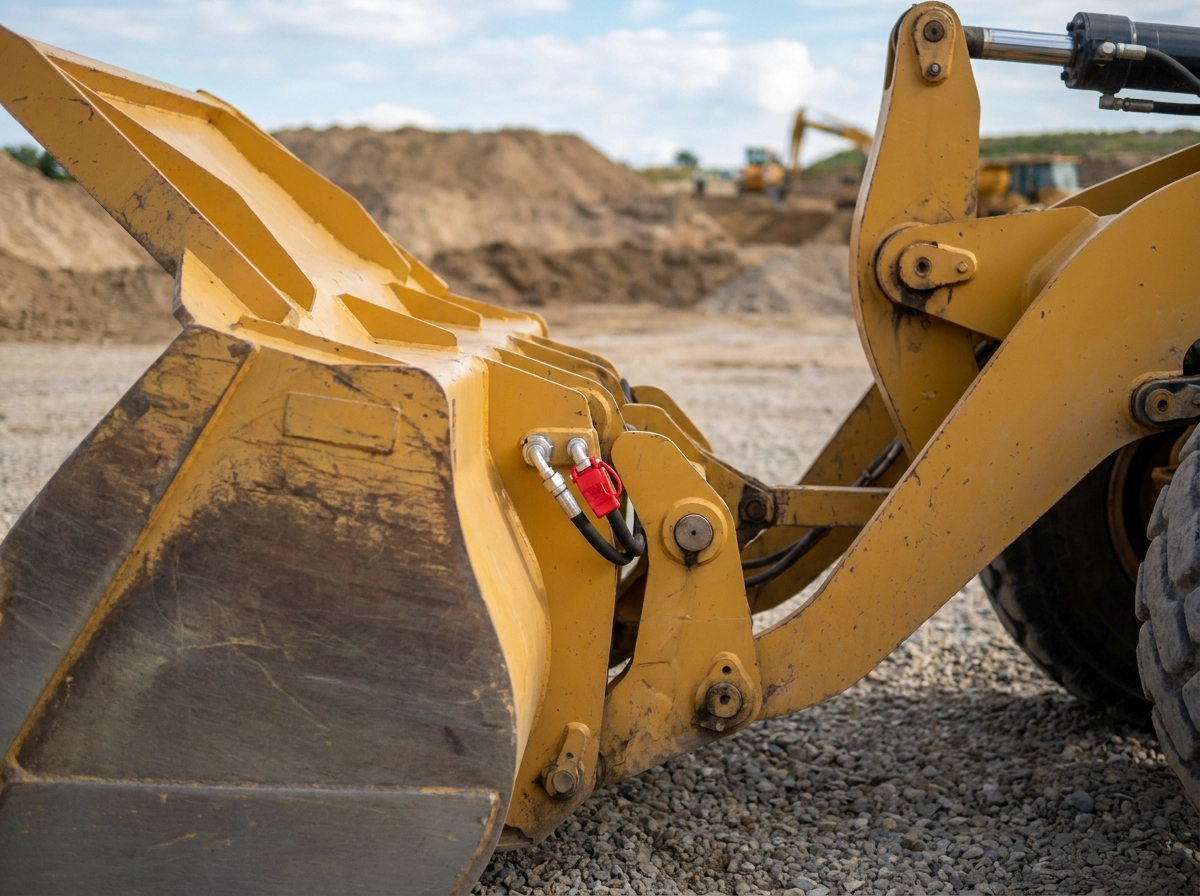
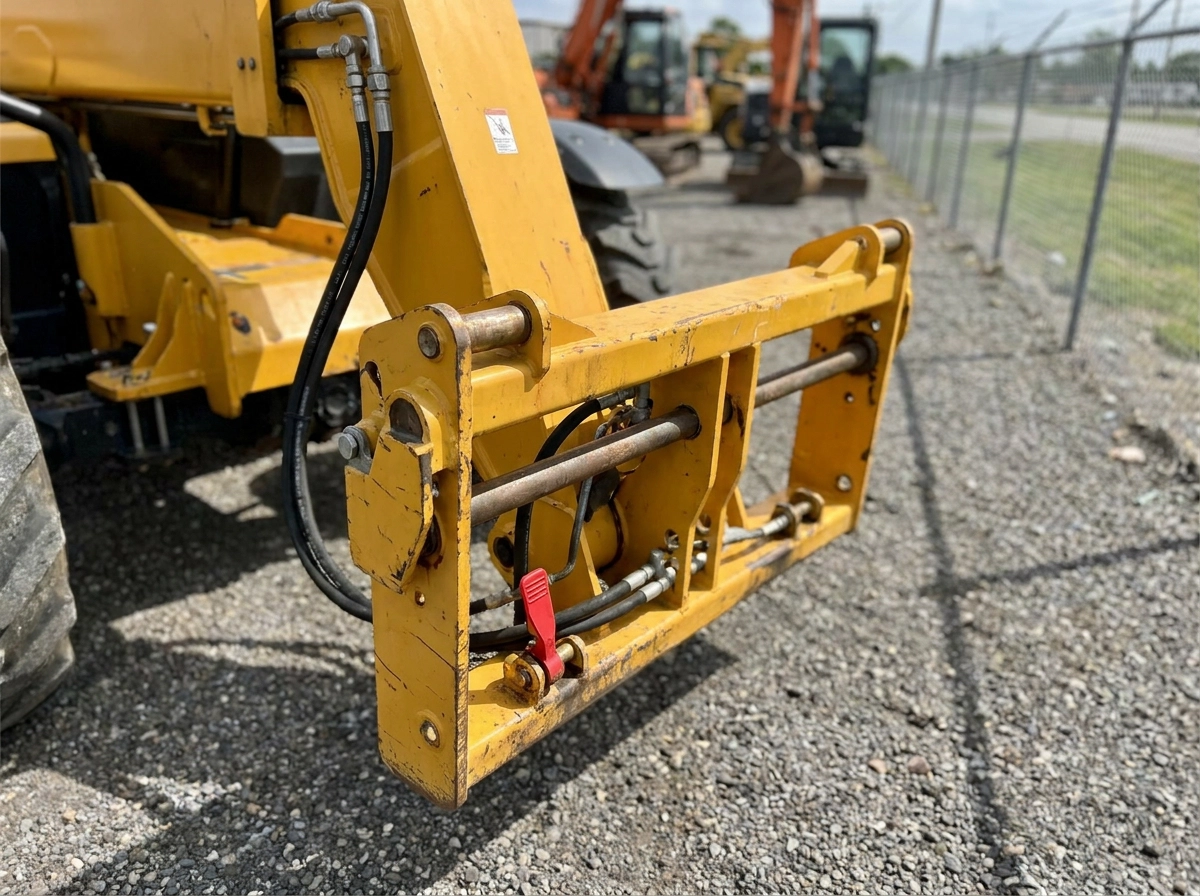
The key difference is the attachment system. A standard wheel loader runs a fixed or quick-coupler bucket, essentially a single-tool setup. An ITC is built around a fully integrated multi-attachment mounting system, meaning operators can swap between forks, grapples, buckets, and other tools on the same machine as the job demands. That versatility is the whole point of the machine, and it’s what sets it apart.
Because of that multi-tool capability, ITCs earn their place on sites where one machine type simply won’t cut it. You’ll find them in coal mining, metalliferous mining, civil construction, and heavy material-handling environments where swapping attachments throughout a shift isn’t optional, it’s the job.
That also means operating an ITC requires a different skill set than running a loader. An ITC operator needs to know how to select the right attachment for a task, fit and test it correctly, and work within the machine’s design load limits for each tool. None of that is assessed in a wheel loader course, because a wheel loader operator never needs to do it.
This is why employers in coal and metalliferous mining specifically call out ITC operation as a standalone competency requirement, completely separate from any loader qualification. If your site has an ITC, a loader ticket won’t cover you. You can check out A2B Training’s integrated tool carrier course to see exactly what the correct qualification involves.
What Is RIIHAN311F and What Does It Cover?
So now you know what the machine is, let’s talk about the ticket you need to operate one legally.
RIIHAN311F, formally titled Conduct operations with integrated tool carrier, is the nationally recognised unit of competency for ITC operation. It was released on 11 December 2018 and remains currently active on training.gov.au. If someone tells you to “just get a loader ticket” before jumping on an ITC, this is the specific unit they should be pointing you toward.
What the Unit Actually Covers
RIIHAN311F spans five core operational elements:
- Planning and preparation: hazard identification, PPE, and confirming the right tools for the job
- Operating the ITC: pre-start checks, positioning, lifting and moving loads, and post-operational inspection
- Relocating the machine between worksites
- Attachment management: selecting, fitting, testing, and removing attachments
- Housekeeping and hazard control on completion
The attachment element is where RIIHAN311F really separates itself. Performance criteria 4.1 to 4.4 require operators to select the right attachment for each task, fit and test it correctly, operate within design load limits, then remove and store it properly. That entire competency set has no equivalent in the wheel loader units.
Elements 2.6 to 2.8 add another layer specific to the ITC’s lifting role: communicating with a dogman to confirm correct slings and lifting gear, securing loads before movement, and using approved signals throughout. These aren’t box-ticking exercises; they reflect how ITCs are actually used on site.
The unit also assesses foundation skills. You’ll need to read and interpret workplace procedures and legislation, and use equipment capacity schedules to confirm safe working load limits numerically. Both are formally assessed as part of a compliant RIIHAN311F course.
One important heads-up: licensing and regulatory requirements can vary between states, territories, and industry sectors. Always confirm your local obligations before you book.
ITC vs Wheel Loader: A Side-by-Side Breakdown
So now you know what RIIHAN311F covers, here’s where it gets important: knowing that unit exists doesn’t automatically tell you which ticket you need. The clearest way to sort that out is to put both machines side by side.
| ITC | Wheel Loader | |
|---|---|---|
| Unit code | RIIHAN311F | RIIMPO304E or RIIMPO321F |
| Attachment system | Fully integrated multi-tool, swapping is a core task | Fixed or quick-coupler bucket, single-tool setup |
| Primary deployment | Mines, recycling facilities, complex civil sites | Bulk material moving, loading trucks |
| Key competencies assessed | Attachment selection, fitment, load-limit confirmation, dogman communication, plus standard machine operation | Tramming, bucket technique, payload management, site safety |
These are three separate qualifications. Holding RIIMPO304E does not cover you for ITC operation, and RIIHAN311F does not substitute for a wheel loader ticket. There is no overlap that counts on site.
The attachment system difference is really the heart of it. A wheel loader typically runs one tool, usually a bucket, and the operator’s assessed skills reflect that. An ITC is designed around swapping between forks, grapples, buckets, and other attachments as the job demands. That’s why RIIHAN311F includes a whole element dedicated to selecting, fitting, testing, and removing attachments within design load limits, skills that simply aren’t assessed under the wheel loader units.
Use cases follow from that. Wheel loaders are workhorses for bulk-moving and truck-loading tasks. ITCs earn their keep on sites where one machine needs to do several jobs, think mines, recycling yards, and multi-stage civil works. If you’re curious about other related plant and equipment courses that sit alongside these in the RII framework, A2B Training covers a wide range.
Both machines can and do share the same site. When that happens, the ticket you hold for the machine you’re actually operating is what matters for compliance and your own legal cover.
Why Do So Many People Confuse the Two?
So if they’re genuinely different machines with different unit codes and different assessed competencies, why does the mix-up happen so often? A few reasons, and they stack on top of each other.
The most obvious one is looks. From across a busy site, an ITC and a wheel loader are roughly the same size and share that familiar cab-forward shape. If you haven’t operated both, you’d be forgiven for thinking they’re the same machine in different branding. The difference is in the attachment system, not the silhouette, and that’s not obvious from twenty metres away.
Then there’s the language problem. Supervisors and employers routinely say “go get your loader ticket” without specifying which machine is actually on site. That one phrase covers at least three different qualifications, and the person being sent off to enrol has no way of knowing which one applies unless they ask.
Course catalogues don’t always help either. RIIHAN311F and RIIMPO304E regularly appear side by side in training listings without much explanatory copy to flag that these are genuinely different machines with different assessed tasks. For a first-time enrolee, picking the wrong one is an easy mistake.
The same problem shows up online. Someone searching for RII tickets or a wheel loader training course can land on a page listing both options without any clear signal that the two cover different equipment entirely.
The consequence isn’t just an inconvenient day of training. Arriving on site with the wrong ticket is a compliance issue for the worker and a direct liability issue for the employer. Getting the enrolment right upfront costs nothing extra. Getting it wrong can.
Which Ticket Do You Actually Need?
So now you know why the confusion happens. Here’s how to cut through it.
The quickest decision rule: look at the machine you’ll actually operate on site. If it has a fully integrated multi-attachment mounting system and your role involves fitting and swapping attachments, like forks, grapples, or buckets, you need RIIHAN311F. That’s the integrated tool carrier ticket, full stop.
If you’re on a standard front end loader, bulk-moving material and loading trucks, you’re after a wheel loader operator training qualification. That’s either RIIMPO304E or RIIMPO321F, depending on your sector and what your employer specifies. Both are separate units, and holding one doesn’t cover you for the other.
Still not 100% sure which machine you’ll be on? Check the manufacturer’s spec sheet or ask your site supervisor before you book anything. It genuinely takes two minutes and saves you a wasted enrolment.
Employers, this one’s for you too. Sites often run both wheel loaders and ITCs side by side and call them both “loaders” on the scheduling sheet. When you’re booking multiple workers into courses, check each person’s assigned machine against the correct unit code. Getting it wrong is a compliance issue, not just an admin inconvenience. The same kind of ticket-matching logic applies if you’re booking excavator operators, and if that’s also on your radar, this breakdown of how to tell RIIMPO301E and RIIMPO320F apart so you book the right excavator course first time is worth a read.
State and territory requirements can add another layer as well. Some jurisdictions have licensing conditions on top of the RII unit itself, so confirm your local obligations with your training provider before you lock in a date.
Finally, if your role genuinely covers both machine types, look for a training provider offering combo enrolments. Knocking out multiple tickets in one booking is significantly better value than scheduling them separately.
Get Your ITC or Loader Ticket at A2B Training
Once you’ve confirmed which ticket you need, the next step is finding a training provider who has both options right and knows the difference between them.
A2B Training is a nationally recognised RTO based in Maddington, and they’ve been delivering hands-on heavy equipment training in Perth for a long time. Crucially, they offer RIIHAN311F (integrated tool carrier) and the wheel loader units RIIMPO304E and RIIMPO321F as separate, correctly structured qualifications, not lumped together under a vague “loader” category.
All training is practical and delivered on-site at the Maddington facility, which sits in a convenient spot for workers across the Perth metro area. Courses run six days a week, so you’re not stuck waiting weeks for a seat to open up.
If you need more than one RII ticket, A2B offers combo deals that make knocking out multiple qualifications in one booking genuinely good value. For employers upskilling a team across several machine types, that’s a straightforward way to manage cost and scheduling without booking each course separately.
Not sure which course you actually need? The trainers and assessors at A2B know the difference between an ITC and a wheel loader inside out. Get in touch before you commit and they’ll help you confirm the right enrolment, so you’re not showing up on training day with the wrong paperwork.
It’s also worth knowing that A2B’s training covers the pre-start checks every operator must carry out before each shift, so you leave with the full practical picture, not just the basics.
Searching for a wheel loader training course or an RII loader ticket in Perth? A2B has both, listed correctly and clearly separated, so you’ll enrol in the right course the first time.
The Bottom Line
Here’s the short version: RIIHAN311F and a wheel loader ticket are not the same qualification. They cover different machines, assess different competencies, and getting one does not cover you for the other. The machines may look similar from across a site, but the training, the assessed tasks, and the unit codes are genuinely distinct.
The fix is simple before you book anything, confirm the exact machine you’ll be operating. If it has a fully integrated multi-attachment system and your role includes fitting and swapping implements, you need RIIHAN311F. If you’re on a standard front end loader moving bulk material, you’re looking at RIIMPO304E or RIIMPO321F. Two minutes with your site supervisor or the machine’s spec sheet is all it takes to get that right.
A2B Training offers both qualifications as correctly structured, separate courses, running six days a week out of Maddington. If you’re still not sure which ticket fits your role, get in touch before you enrol and the team can point you in the right direction. And if your site runs more than one machine type, it’s worth checking out related heavy equipment courses like the rigid haul truck qualification to see whether a combo booking makes sense for your situation.
Wrong ticket means arriving on site without valid coverage. Right ticket means you’re good to go.
Conclusion
The difference between RIIHAN311F and a wheel loader ticket is not a technicality; it is a genuine qualification gap that affects your legal coverage on site. The machines look similar, but the training, competencies, and unit codes are distinct. Booking the wrong course costs you time, money, and potentially your right to operate.
The solution is straightforward: confirm your machine type before you enrol, match it to the correct unit code, and choose a registered training provider who delivers both qualifications properly.
A2B Training runs both courses six days a week out of Maddington, with a team ready to help you identify exactly which ticket fits your role. Do not leave it to guesswork. One quick conversation before you book can save weeks of delays on site. Get in touch today and start your training with complete confidence.