
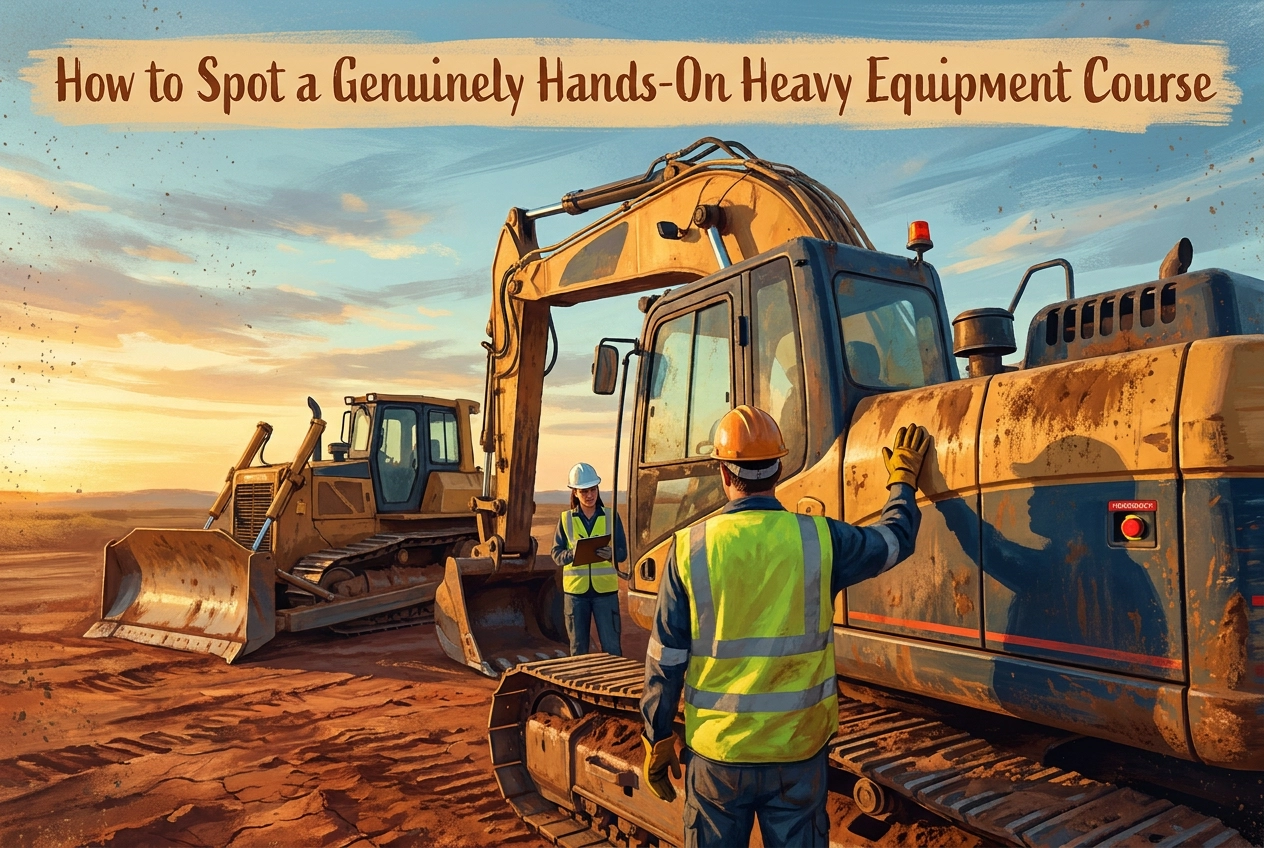
So you’re thinking about a heavy equipment operator training course. Here’s the thing most beginners don’t realise: the ticket is only worth what the supervised seat time behind it is worth. You can pay for a course that looks like a bargain, but if you walk out without real hours on a real machine, the employer ends up paying for it twice. That’s why this post skips the brand comparison and gives you a set of judgement criteria instead: practical hours per candidate, class sizes and assessor ratios, how the practical assessment is actually run, and whether the assessor watches you perform real machine tasks. Price alone is the worst signal you can use, and we’ll explain why.
Then you’ll get a question list to take with you before you pay a deposit, so you can interrogate any provider. We’ll also show where A2B Training fits. We’re a Registered Training Organisation (RTO), established a long time, with hands-on practical training at our convenient Maddington location. We run six days a week, offer combo deals, and focus on value for money. We’ll give you the criteria first, then show how to test us against them.
Why Supervised Seat Time Is What You’re Really Paying For
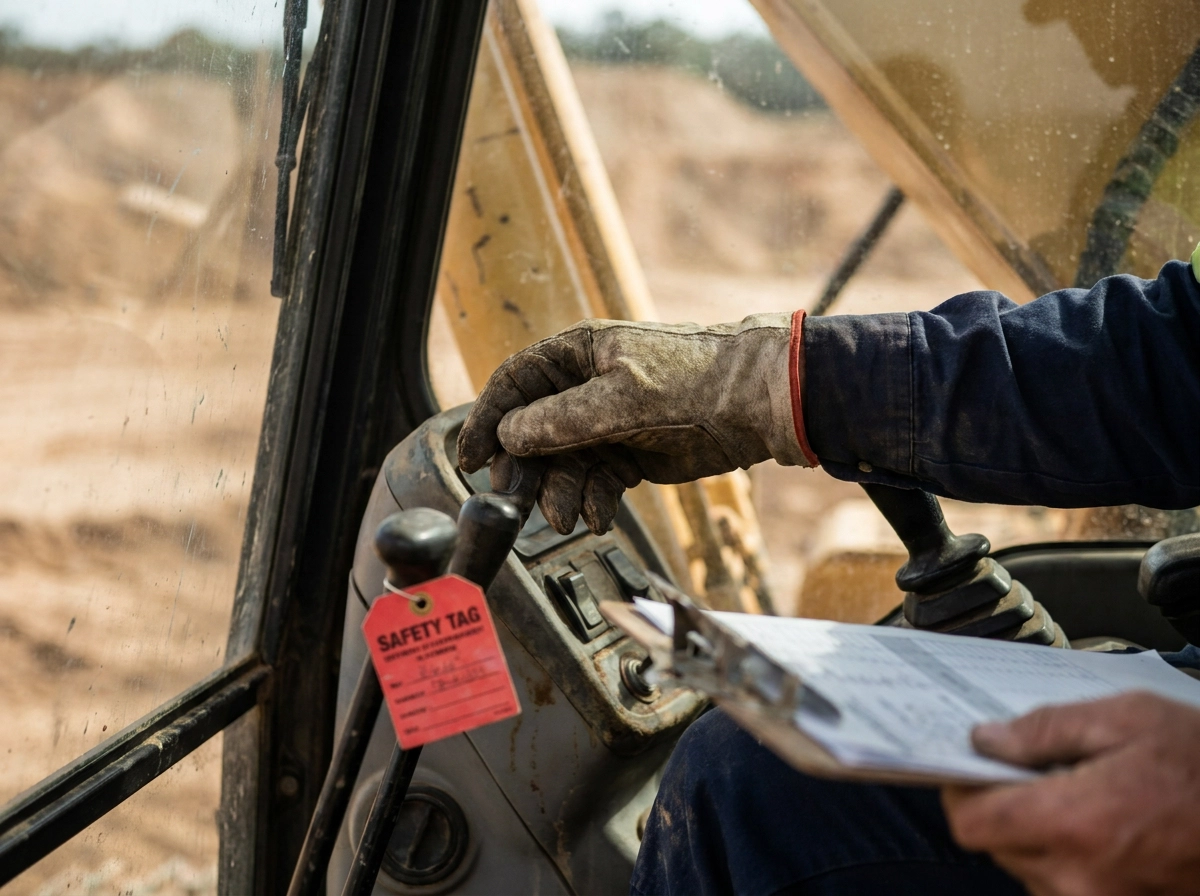
A ticket is paperwork. It records what someone proved they could do. Paying for heavy equipment operator training isn’t buying the certificate. It’s buying the proof: supervised time in the seat.
Employers hire on demonstrated skill. As any site manager will tell you, an operator who can’t run the machine safely or productively creates rework, machine damage, supervision load and site safety risk. That lands on whoever paid for training, a heavy machinery training conversation most buyers have too late. Sending an incompetent operator onto a civil site is a WHS liability that follows you, which is why verifying site compliance goes beyond ticking a box.
Performance evidence, broadly, the requirement that a candidate demonstrates the task rather than just answers questions about it, is the standard this article measures courses against.
Two providers can advertise nationally recognised heavy equipment operator training, both legitimate, and offer wildly different real machine time per candidate. The certificate looks identical and won’t tell you which you got.
Check hours per candidate, class size and assessor ratio, how practical assessment is run, whether an assessor actually watched, and what price is really telling you. There’s a copyable question list at the end.
Ask for the number. If they won’t give it, that’s your answer.
Criterion 1: Practical Hours Per Candidate, Not Per Course
When you’re comparing providers, ask each one for supervised machine hours per candidate, in writing, before you pay a deposit. Not the course length. Not the total machine hours across the whole class. The number that matters is the time each person actually spends on the controls.
Do the maths yourself. One machine, twenty candidates, a full day: that’s minutes each, no matter how long the day runs. So follow up with how many machines run at once and how the group gets rotated.
There’s no published benchmark for how many hours a heavy machinery training course should include, so treat this as a question, not a pass mark. A useful answer sounds like “four hours each on the excavator, two machines running, recorded per person.” A dodge sounds like “plenty of time on the machine.” Push for numbers.
Combo deals deserve the same scrutiny. If a course bundles several machines, ask how the hours split across each one. A combined ticket can easily mean a solid amount on the loader and a token pass on the skid steer. If you’re bundling tickets for a whole crew, a multi-ticket training plan for a civil construction crew in Perth is worth mapping out before you book anything.
Also remember heavy construction equipment operator training isn’t one product. Discuss hours per machine type, not as a lump sum for the whole qualification.
Here’s your line: “How many hours on the machine will I personally get, and how is that recorded?” A provider that tracks hours per candidate answers that in seconds.
Criterion 2: Class Sizes and Assessor Ratios
Criterion 1 gave you the hours question. Now you need to know who’s watching.
Assessor ratio just means how many candidates one trainer or assessor is responsible for watching at any one time. It’s the mechanic that decides whether anything gets properly observed.
So ask directly: how many candidates to a machine? How many assessors on site during practical sessions? How many machines running at once? And how much one-on-one time does each candidate actually get?
Here’s why it matters even when the hours quote looks fine. Say a class is capped at eight with two machines running. That’s four people per machine, rotating through. The same eight-candidate class with one machine and one assessor is a completely different day. Same headline hours, half the seat time.
To be clear, this is verification, not a standard. No sourced class size limit or mandated ratio turned up in the research for this piece, so treat these as questions to ask rather than numbers a provider must hit.
Practical ways to check: ask to visit the training facility before booking. If that’s not possible, ask for photos or video from a typical practical day, and ask how recently they were taken. You can also ask A2B how they describe a typical practical day to see how a hands-on provider sets things up.
And anyone signing off a practical assessment needs the right assessor credentials for the specific unit being delivered. Fair question: who’s the assessor, and what do they hold?
Next up, how the practical assessment itself is actually run.
Criterion 3: How the Practical Assessment Is Actually Run
Ratio answers tell you who’s watching. This one tells you what they watch.
The national register entry for RIIMPO304E (wheel loader operations) is the benchmark to hold a provider to. Its performance evidence requires loader operations that safely, effectively and efficiently follow workplace procedures on at least two occasions, including prestart checks and shutdown. That’s the minimum the unit states, not a quality mark. Two passes hasn’t broken the unit, but it shows where the bar sits. Ask how many passes beyond two the provider runs.
The unit also describes a genuine practical: the same sequence a good practical course walks through, driving and operating the loader using techniques suited to equipment capabilities and site conditions, monitoring indicators and alarms, then parking, securing and inspecting the machine.
Ask: is the practical on real equipment, in conditions resembling a real work site, with prestart and shutdown assessed rather than demonstrated once by the trainer? If a provider can’t say where and on what machine the practical happens, that’s the tell.
The unit also notes licensing and certification requirements vary between states, territories and industry sectors. Confirm WA requirements with the state regulator.
Criterion 4: Does the Assessor Watch Real Machine Tasks?
The assessor being “on site” isn’t the point. What matters is whether they stood there and watched you personally complete the actual task: the prestart, the operation, the monitoring of gauges and alarms, the shutdown. Watched you, not the group.
So ask the assessment-shape questions:
- Is the practical run during real machine tasks like loading, digging or stockpiling, or is it a simulation?
- Who signs off on your ticket, and did that person personally observe you operating?
This is where employability gets decided. If the sign-off came from written answers or a group demonstration, the ticket may not reflect what you can do on a Monday morning. That’s the exact gap the employer pays for twice. And remember, the RII ticket is the legal baseline, so it should mean something.
One more catch: RIIMPO304E is just one unit. Excavator, skid steer, roller and telehandler tickets each have their own register entries with their own evidence requirements. Check each one rather than assuming they’re identical.
Ask to see the practical assessment tool and what gets recorded per candidate. A provider that documents observed performance will hand this over without fuss.
Plain credibility test: ask whether the practical is videoed or logbooked, and whether you walk away with a record of what you actually performed.
Criterion 5: Why Price Is the Worst Signal You Can Use
Fair enough, a cheap ticket looks tempting. But here’s the plain logic: the cheapest heavy equipment operator training ticket is usually cheap because something gave way. More candidates per machine, fewer supervised seat hours, or less assessment attention. Seat time is the most expensive input to deliver, so it’s the first thing to go.
That employer-pays-twice logic is at its sharpest when it comes to price.
So do the value for money maths instead. Take supervised machine hours per candidate and divide it by the dollars. Two providers with a similar sticker price are rarely offering the same amount of seat time. (Similar logic applies when you’re weighing up rigid vs articulated haul truck tickets.)
Here’s a scope question buyers often miss. The unit entry checked for this piece lists coal mining, extractive and metalliferous mining as sectors. If you’re training for civil construction work, ask the provider how the unit applies to civil sites rather than assuming it translates directly.
One more caveat: the unit states licensing and certification requirements can vary between states, territories and industry sectors. Confirm what’s actually required in WA before letting price decide anything.
The sequence is simple: get the hours and ratio answers first, then compare what you’re paying per hour of real machine time.

Your Question List Before You Pay a Deposit
Those numbers only count if they’re in writing. Send this list to every provider.
Machine hours
- How many supervised machine hours will I personally get, and how is that recorded?
- How are hours split across machines in a combo?
- For a crew, will you quote per person per machine hour?
Class size and ratio
- How many candidates per machine, how many assessors on the floor, and how many machines run at once?
Assessment method
- What machine will I be assessed on?
- Is prestart and shutdown part of the assessment?
- Describe a practical day start to finish.
Assessor credentials
- Who signs off, and did they personally watch me operate?
- What do they hold for this exact ticket?
Licensing and scope
- Not sure what code you’re booking? Look up the unit code on the national register, then ask: is this exact unit on your scope?
Price inclusions
- What’s included in the price, and what’s extra?
Compare written answers side by side, because counter chat softens. “We follow the national standard” and “plenty of machine time” are non-answers. Push for numbers and a practical-day description. Ask them to complete the list in writing before payment and keep it. That written list is what you’re buying.
Where A2B Training Fits (and How to Test Us Against the List)
Once you’ve got your question list ready, it’s worth putting it to a provider that expects it. A2B Training is a nationally recognised RTO in Maddington, WA, established and operating in this industry for a long time. They run hands-on, practical heavy machinery training at their Perth facility six days a week, led by experienced trainers and assessors at a convenient location. Courses cover hydraulic excavators, wheel loaders and telescopic handlers, plus a range of nationally recognised tickets covering loader, skid steer, excavator, roller, integrated tool carrier, rigid haul truck, articulated haul truck and watercart. Training includes safety, pre-operational checks, hazard identification on civil construction sites and equipment controls.
If you need more than one ticket, their combo deals and value for money are worth a look. Just apply the same rule: a combined booking should be measured on supervised machine time per candidate, not on the number of certificates you walk away with.
Then ask A2B’s team the exact questions from the list above. Confirm current WA licensing requirements with the state regulator too. A provider that welcomes those questions is the whole point.
What to Do Next
So there it is. Five things to check before you hand over your money:
- Hours per candidate, not total course hours.
- Class size and how many assessors are actually on the floor.
- How the practical assessment is run.
- Whether an assessor stood there and watched you do the real tasks.
- Price, which ranks last every time.
The two-occasion floor in RIIMPO304E is still the reference point, ask what the provider does above it.
Two caveats apply to any decision. Confirm licence and certification requirements with the WA regulator, and check each unit’s register entry rather than assuming all tickets work the same way.
Conclusion
Spotting a genuinely hands-on heavy equipment course comes down to five checks: hours per candidate, assessor ratios, how the practical assessment runs, whether an assessor watches you do the real tasks, and price last. The strongest signal is verified seat time.
A2B Training in Maddington is ready for the list, bring it.