
Last Updated: November 22, 2026
Quick Summary
Hands-on machinery training in Perth means supervised operation of real earthmoving equipment under an assessor’s eye, not classroom theory. Choose a provider by verifying its RTO number, checking the unit of competency is on its scope of registration, and asking how many hours of machine time each student gets.
- A 2025 Forests journal study found simulator and machine-trained groups reached comparable proficiency after eight hours.
- A2B Training runs nationally recognised machinery training six days a week across excavators, loaders, skid steers, rollers, dump trucks, water carts and telehandlers.
- Ask how many students per machine and how many hours each will operate, because course length and machine time are different numbers.
- The skid steer loader course runs one to two days depending on experience.
- Bring steel-capped boots, long trousers, a hi-vis shirt, photo identification and your USI to your first training day.
Table of Contents
- What Hands-On Machinery Training in Perth Actually Involves
- Machinery Training Provider Checklist for Perth Buyers
- RII Machinery Tickets: What They Are and Which One You Need
- Machinery Training Course Duration and What Fits Your Schedule
- The Hands-On Plant Operator Assessment, Step by Step
- How to Prepare for Your First Training Day
- Enquire About Your Machinery Training Place
- Frequently Asked Questions
What Hands-On Machinery Training in Perth Actually Involves
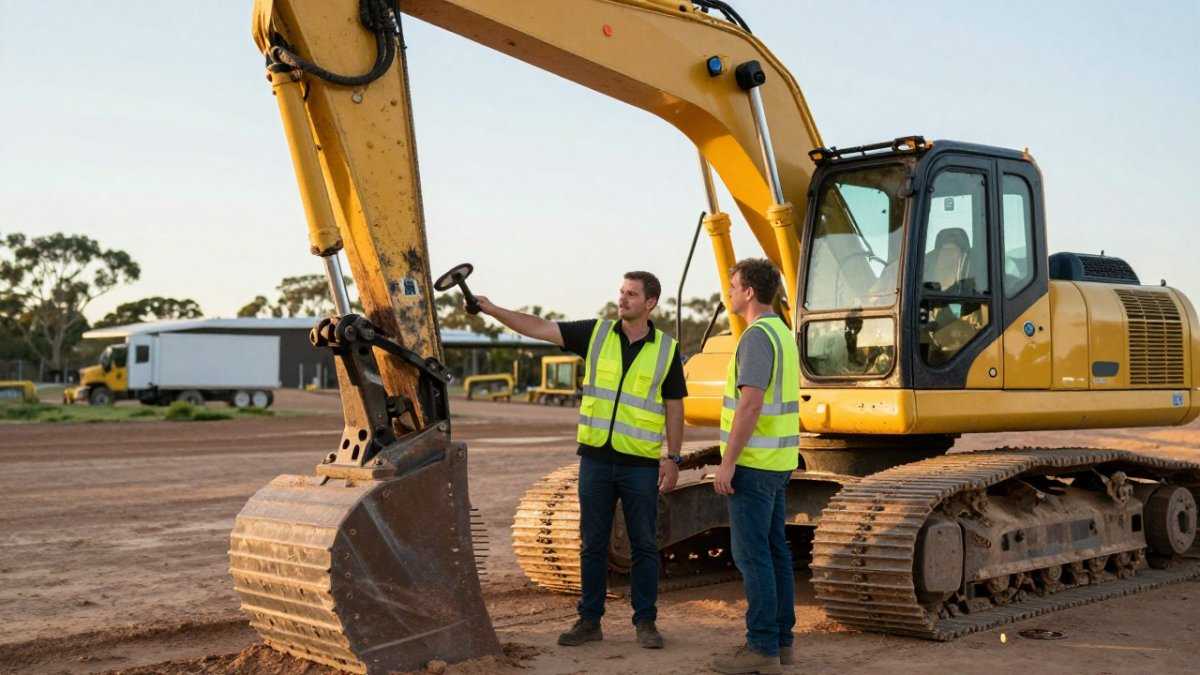
Hands-on machinery training is supervised operation of real earthmoving equipment under an assessor’s eye, not classroom theory. A 2025 study in Forests journal found simulator and machine-trained groups reached comparable proficiency after eight hours, though the sample was just 12 forwarder operators. That matters: seat time is the currency of this trade.
At A2B Training, we run nationally recognised machinery training across excavators, loaders, skid steers, rollers, dump trucks, water carts and telehandlers, six days a week.
Here is what most guides get wrong. They describe the course but never explain how to judge one. Below, we show you exactly how to pick a provider, understand your ticket, and walk onto site prepared.
Machinery Training Provider Checklist for Perth Buyers
Not all machinery training providers deliver the same thing, even when the ticket name looks identical. You can browse the full courses catalogue to compare which machines and tickets a provider offers. Use this checklist before you pay a deposit.
- Confirm the provider is a registered training organisation and ask for its RTO number
- Check the specific unit of competency is on its scope of registration
- Ask how many hours of machine time each student gets
- Confirm the machines you will actually operate match your job’s needs
- Ask whether assessment happens on the same day or separately
- Get the total fee in writing, including any reassessment charge
- Check weekend and evening availability if you work weekdays
- Ask what happens if you need to reschedule
Verify the RTO and the Units on Scope
A registered training organisation delivers and assesses nationally recognised training under the national vocational framework. Ask for the RTO number and verify it on the national register before booking. A provider can hold a ticket name in its marketing while the specific unit sits outside its scope, so check the code, not the brochure.
Ask About Machine Time, Not Just Course Length
Course length tells you how long you are on site. Machine time tells you how long you are in the seat. Those are different numbers, and the gap is where new operators get caught out. A two-day course with four students and one machine means far less seat time per person than the same course with two machines. Ask directly: how many students per machine, and how many hours each will operate.

RII Machinery Tickets: What They Are and Which One You Need
An RII machinery ticket is industry shorthand for a statement of attainment from a nationally recognised unit of competency in the Resources and Infrastructure Industry training package. The ticket proves you were assessed as competent to operate that specific machine, it is not, by itself, a licence to operate on every site.
Training, assessment and the ticket are three different things
Training is the supervised practice. Assessment is the formal judgement against the unit’s performance criteria. The ticket is the document issued after you are found competent. A provider can train you without being able to assess you, and a ticket name in marketing does not guarantee the specific unit sits on the provider’s scope of registration. Always check the unit code, not the brochure.
Units by machine and what each outcome covers
| Machine | Unit of Competency | Typical Use |
|---|---|---|
| Excavator | RIIMPO301E | Civil construction, earthmoving |
| Skid steer loader | RIIMPO318F | Site clean-up, tight-access work |
| Front-end loader | RIIMPO304E | Bulk material handling |
| Roller | RIIMPO317F | Compaction on civil works |
| Telehandler | RIIHAN309F | Lifting and materials placement |
Prerequisites and eligibility
Ask the provider about any prerequisites and eligibility requirements before booking.
Licensing and site requirements are separate
Check with the employer or site before you assume the ticket is the end of the process.
Which one you actually need
Match the unit to the work, not to the machine you find most interesting. If you need several tickets for one role, ask about package deals. For a full breakdown of the excavator ticket and what it covers, see the RIIMPO301E hydraulic excavator course.
Watch out: booking a ticket for a machine you will not operate on site wastes money and seat time, confirm the unit against the job description first.
Machinery Training Course Duration and What Fits Your Schedule
Duration and cost are the two questions every buyer asks first, and most course pages answer neither properly. Here is how to read both before you book.
Typical durations by machine
Course length depends on the machine and your experience. For example, the skid steer loader course runs one to two days depending on experience. Ask the provider to confirm the duration for your course.
Ask the provider to confirm the hours of supervised machine time, not just the calendar days.
What the fee should include
A quoted course fee is only comparable if you know what sits inside it. A clear quote should break out:
Ask specifically whether reassessment is included or billed separately, and whether a failed assessment means paying for a full repeat or a shorter gap session. That single question separates honest quotes from headline prices.
Funding and payment
If your employer is paying, get the invoice addressed correctly and confirm whether the fee is GST-inclusive before you sign.
Fitting training around work
If you work weekdays, weekend delivery is the deciding factor. Confirm whether weekend courses run at the same student-to-machine ratio as weekday ones, because a cheaper weekend slot with more students per machine can cost you seat time. Also ask how much notice you need to reschedule and whether a cancellation fee applies.
The Hands-On Plant Operator Assessment, Step by Step
The practical assessment is where your ticket is won or lost.
If you want the faster route through the process, read how to get excavator and telehandler tickets fast.
How to Prepare for Your First Training Day
Preparation is simple and it directly affects how much seat time you get. Arrive early, dressed for a worksite, and ready to listen.
- Wear steel-capped boots, long trousers and a hi-vis shirt
- Bring photo identification for enrolment
- Bring your USI, the unique student identifier required for nationally recognised training
- Read the pre-course materials if the provider sends them
- Declare any medical condition or medication that affects operating safely
- Bring water, lunch and sun protection
A 2023 USDA Forest Service Treesearch review of controlled experiments comparing simulator and machine training for logging operators found the evidence base remains thin, which is why real machine time still matters most for site readiness. If you have never operated plant before, say so at booking.
Enquire About Your Machinery Training Place
Choosing machinery training comes down to three checks: a verified RTO, honest machine time, and an assessment you understand before you arrive. Get those right and the rest is preparation.
At A2B Training, we deliver nationally recognised training and assessment with real trainers who have experience in mining, civils and earthmoving. We run all courses six days a week, offer a price-match guarantee and package deals. Enquire now for the right unit for your job and the next available date.
Ready to get your ticket sorted? Get started with A2B Training and book a course that fits around your work week.
Frequently Asked Questions
What machinery can you train on in Perth?
A2B Training runs courses on excavators, loaders, skid steers, rollers, water carts, dump trucks and telehandlers, all delivered as nationally recognised units. Each course combines theory with supervised time on the machine and a practical assessment. Ask which specific unit code applies to the machine you need, because your site may require a particular ticket rather than a general statement of attendance.
How do I choose a reputable earthmoving training provider?
Start with the provider’s RTO number and confirm the units you need sit on its scope of registration. Then ask how many hours you spend on the machine versus in the classroom, who delivers the training, and whether assessment happens on real equipment. A provider that answers those questions directly, and puts the answers in writing, is a safer bet than one that quotes a price before discussing the ticket you need.
Do machinery training courses include practical, hands-on assessment?
The units that lead to an operator ticket require a practical assessment, so hands-on time is not optional. You will typically complete pre-start checks, operate the machine through set tasks, and demonstrate shutdown and basic maintenance under an assessor’s observation. Ask how the provider structures that assessment and how much practice you get before it, because simulator-only or classroom-only delivery will not meet the unit requirements.
How long does machinery operator training take?
Course duration depends on the machine and your existing experience. Ask the provider to confirm the duration and supervised machine time for the course you are booking.
