

Last Updated: October 25, 2026
Quick Summary
Excavator certification cost in Perth ranges from $645 per unit with A2B Training, covering accredited RII training, practical machine operation, safety assessment, and competency verification. The total cost depends on course format, duration, provider inclusions, and whether you need additional fees for assessment, resources, or equipment hire.
- A2B Training charges $645 for RIIMPO301E and RIIMPO320F excavator units
- Most excavator courses run one to two days depending on prior machinery experience
- Compare providers by building a line-item breakdown including tuition, assessment, resources, equipment hire, and PPE costs
- Verify the provider’s RTO registration and confirm the course leads to a nationally recognised RII unit before comparing prices
- A2B Training offers a price-match guarantee on excavator certification cost for like-for-like courses
Table of Contents
- Excavator Certification Cost Comparison in Perth
- Understanding Excavator Ticket Cost and What’s Included
- Excavator Training Duration and Course Structure
- Excavator Ticket vs Excavator Licence: Key Differences
- Excavator vs Loader Training for Mining Career Paths
- How to Compare Excavator Course Providers Fairly
- Getting Started with Your Excavator Certification
- Frequently Asked Questions
Excavator Certification Cost Comparison in Perth
An excavator ticket opens doors in construction and civil works, but costs vary widely between providers.
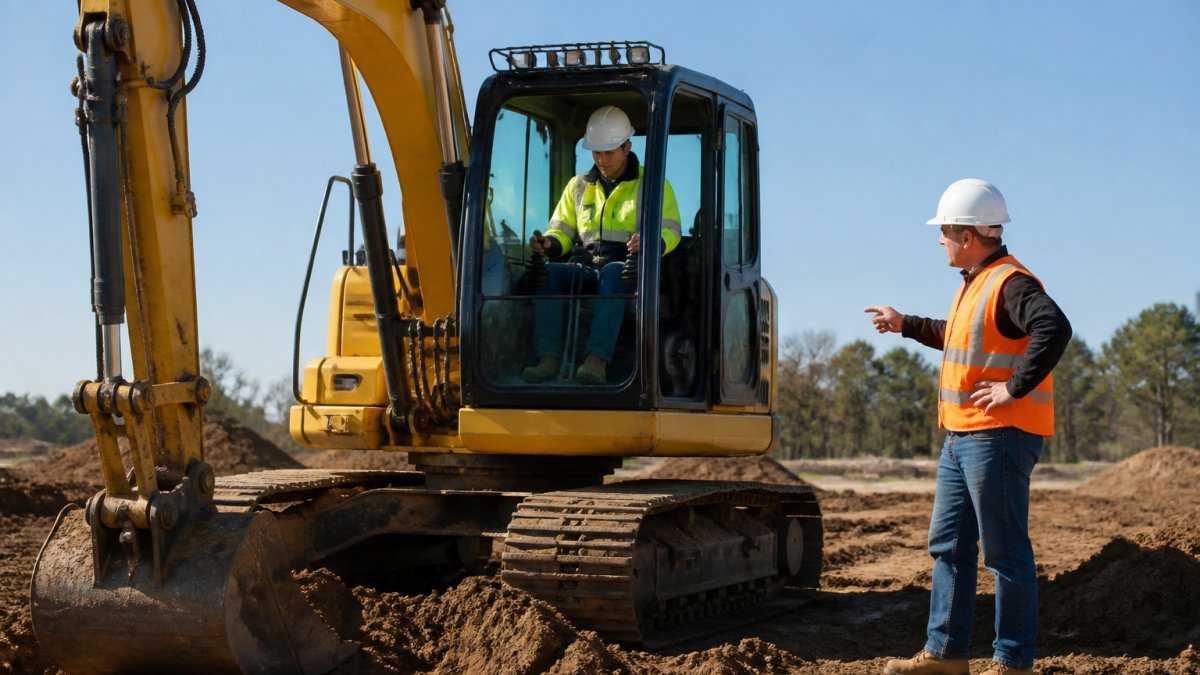
The excavator certification cost depends on course format, duration, and provider. The real challenge is understanding what’s included.
This guide breaks down what excavator certification actually costs and how to compare providers fairly.
Understanding Excavator Ticket Cost and What’s Included
An excavator ticket, formally an RII competency assessment, certifies you to operate excavators on commercial sites. The excavator ticket cost covers accredited training, practical machine operation, safety assessment, and formal verification of competency.
What’s typically included in the cost:
- Accredited training delivery from a registered training organisation (RTO)
- Practical hands-on time on actual excavator equipment
- Theory and safety instruction covering site procedures and hazard management
- Competency assessment, the formal test that results in your ticket
- Certificate issuance, your official proof of qualification
Some providers bundle extras like equipment hire or refresher sessions; others offer only the essentials. Neither is inherently better, it depends on your experience level.
The question isn’t which number is lowest, it’s which option delivers the skills and confidence you need. A $500 course that leaves you uncertain on site costs more than a $700 course that prepares you.
RIIMPO301E Conduct hydraulic excavator operations $645 | page:1
RIIMPO320F Conduct civil construction excavator operations $645 | page:2
Excavator Training Duration and Course Structure
Most excavator courses run one to two days, depending on prior experience with heavy machinery.
Beginners typically need two full days; if you’ve operated similar equipment, one day may suffice. The excavator training duration reflects how much time you need to develop safe, confident operation skills.
A typical structure looks like this:
- Day 1 morning: Safety, site procedures, machine familiarisation, controls
- Day 1 afternoon: Basic operation, bucket handling, positioning
- Day 2 morning: Advanced techniques, precision work, problem-solving
- Day 2 afternoon: Assessment and competency verification
Some providers compress this into one intensive day for experienced operators; others offer weekday, Saturday, or evening sessions.
A2B Training runs courses six days a week, recognising that many people juggle full-time work while upskilling.
The excavator training duration affects total cost, but rushing to save money often backfires: you’ll feel unprepared on site and may need to retrain later.
Excavator Ticket vs Excavator Licence: Key Differences
These terms get used interchangeably, but they describe different things, and choosing the wrong pathway can mean paying for a qualification that doesn’t meet an employer’s requirement. The key distinction is accredited training versus a ticket versus a VOC assessment.
The three pathways, explained
Accredited training is a structured course delivered by a registered training organisation (RTO) leading to a nationally recognised unit such as RIIMPO301E or RIIMPO320F.
A ticket is the informal industry term for the certificate you receive once assessed as competent against the RII unit.
A VOC (verification of competency) assessment is a standalone assessment of an already-experienced operator against the unit, without the full training course. It’s shorter and cheaper but only suitable if you can already operate safely and confidently.
The cheapest option is only the right option if it matches your experience level. A beginner who books a VOC to save money will usually fail the assessment and end up paying for full training anyway. An experienced operator who books full training may pay for hours of instruction they don’t need.
What each pathway proves, and when employers require it
| Pathway | What it proves | Best suited to | Typical cost profile |
|---|---|---|---|
| Accredited training | You have been trained and assessed against the RII unit | Beginners, career changers | Higher, includes tuition and machine time |
| Ticket (post-assessment) | You have been assessed as competent | Anyone who has completed training or a VOC | Included in training or VOC fee |
| VOC assessment | Your existing skills meet the unit standard | Experienced operators | Lower than full training |
Employers and site operators set their own requirements. Some accept a ticket from any RTO; others require a specific unit (for example RIIMPO320F for civil construction rather than RIIMPO301E). Some site inductions require you to demonstrate competency again on their equipment. Always confirm the exact unit an employer wants before you book.
Where “licence” fits in
“Excavator licence” is sometimes used loosely to mean the same thing as a ticket, but it is not a formal category the way a high-risk work licence is for certain other plant. In construction and civil works, “ticket” and “RII competency” are the industry-standard terms. If a provider advertises an “excavator licence,” ask which RII unit the course leads to and confirm the RTO registration.
What the cost does and doesn’t cover
The excavator ticket cost covers the training and assessment leading to the certificate. It does not cover renewal, additional units, or site-specific inductions. If you plan to operate multiple types of equipment, you’ll need separate tickets for each, an excavator ticket doesn’t qualify you to operate a telehandler or front-end loader. Package pricing across multiple units is worth asking about.
RIIMPO301E Conduct hydraulic excavator operations $645 | page:1
RIIMPO320F Conduct civil construction excavator operations $645 | page:2
Excavator vs Loader Training for Mining Career Paths
Both excavators and loaders are essential in mining and civil construction; which to train on first depends on your career goals.
Excavators excel at digging, trenching, and precise bucket work. Mining operations use them for ore extraction, waste removal, and site preparation.
Loaders (front-end loaders, wheel loaders) move material, ore, waste rock, and aggregate across sites.
The excavator vs loader training decision often comes down to job availability.
Many operators train on both. Each ticket takes one to two days.
Civil construction wheel loader operations $645 | page:3
How to Compare Excavator Course Providers Fairly
Price alone doesn’t reveal value, and a headline fee rarely tells you what you’ll actually pay. Compare providers by building a like-for-like total cost. Most published prices are per person and exclude GST unless stated, so confirm before you rank them.
Build a like-for-like cost breakdown
Ask every provider to quote each line item separately. A provider that bundles them into one number isn’t necessarily cheaper, it just makes comparison harder.
- Tuition and training delivery, the core course fee
- Competency assessment fee, sometimes charged separately from tuition
- Resource and workbook fees, printed materials, online learning access
- Equipment and machine hire, whether the machine time is included or on-charged
- PPE requirements, steel-capped boots, high-vis, and any site-specific gear you must supply
- GST, confirm whether quoted prices include it
- Reassessment fee, what you pay if you don’t pass the first assessment
- Cancellation and rescheduling fees, the cost of moving a booked date
A course advertised at AUD 500 with a separate AUD 150 assessment fee and AUD 80 in resources is a AUD 730 course. View all available courses to compare what each provider includes. A course advertised at AUD 700 all-inclusive is cheaper. The headline number is not the comparison.
What the published prices actually show
Publicly listed prices are inconsistent in ways that make comparison difficult. These figures aren’t directly comparable because they cover different formats and inclusions, which is why the line-item breakdown matters.
Verify a provider’s RTO registration
Prices change. Course fees, funding eligibility, and inclusions are updated by providers throughout the year. Confirm the current quoted price and what it includes directly with each provider before booking, and treat any figure in this guide as a starting point for your own comparison rather than a fixed price.
Check accreditation before you check price
A cheap course that doesn’t lead to a nationally recognised outcome is not a saving. Before comparing fees, confirm:
- RTO registration. The provider must be a registered training organisation. Verify the RTO number with the Australian Skills Quality Authority (ASQA). A2B Training’s RTO registration (52294) confirms we meet national standards for training delivery and assessment.
- The unit of competency. The course should lead to an RII unit such as RIIMPO301E or RIIMPO320F, not an in-house “certificate of completion.”
- Practical hours on the machine. Ask how much of the course is hands-on operating time versus classroom theory. This is the single biggest driver of value and the item most often left out of a headline price.
- Assessment rigour. Ask what you’ll be assessed on: safe operation, hazard identification, bucket control, positioning, and site procedures. A rigorous assessment is what gives your ticket weight with employers.
- Trainer background. Are instructors former operators with site experience, or classroom-only trainers?
- Scheduling and post-training support. Weekend and evening options, multiple start dates, and refresher or job-lead support all affect the real cost of getting qualified and finding work.
A comparison framework you can apply
Rather than ranking providers by headline fee, score each one on the same criteria and total the true out-of-pocket cost.
| Comparison factor | What to record for each provider |
|---|---|
| Advertised fee | Per person, and whether GST-inclusive |
| Assessment fee | Separate or included |
| Resource and equipment fees | Amount and what it covers |
| PPE you must supply | Estimated cost |
| Reassessment fee | Amount if you don’t pass first time |
| Practical machine hours | Total hands-on time |
| Assessment criteria | What you’re tested on |
| Trainer experience | Operator background |
| Scheduling flexibility | Weekday, weekend, evening options |
| Post-training support | Refreshers, job leads, mentoring |
| Total out-of-pocket cost | Sum of all fees above |
Browse all available courses | page:4
Price-match guarantee. A2B Training matches competitor pricing on excavator certification cost. If you find a lower quoted price elsewhere on a like-for-like course, we’ll match it, we’re competing on quality and transparency, not hiding behind price.
Getting Started with Your Excavator Certification
Ready to book? Here’s the process most providers follow.
Step 2: Choose your course format. One day or two? Weekday or weekend?
Step 3: Book and pay. Most providers require payment upfront or at booking.
Step 4: Prepare for the course. Wear steel-capped boots, high-visibility clothing, and comfortable work clothes.
Step 6: Receive your certificate. Once you pass, you’ll get your RII competency certificate.
Contact us to book your excavator certification course | page:5
A2B Training simplifies this process: we handle the paperwork, provide all necessary equipment, and schedule you flexibly.
The excavator certification cost is an investment in your earning potential.
Your next step: confirm your availability, choose a course date that fits your schedule, and reach out to book. Contact us today to reserve your place.
Frequently Asked Questions
How much does excavator certification cost in Perth?
Excavator certification costs vary depending on course format and provider. Costs depend on whether you choose a short course, full-day training, or one-to-one operator training. Contact A2B Training for current pricing and our price-match guarantee options.
What’s the difference between an excavator ticket and an excavator licence?
An excavator ticket, formally known as an RII (Resources and Infrastructure Industries) ticket, is a nationally recognised verification of competency that proves you can safely operate an excavator. An excavator licence is not a standard term in the construction industry; the ticket is what employers and sites require. The ticket demonstrates you’ve completed accredited training and passed a practical assessment.
How long does excavator training take?
Most excavator training courses run one to two days, depending on your prior experience and competency level. Some providers offer shorter introductory courses, whilst others provide extended one-to-one training packages. Duration also depends on how quickly you demonstrate competency during the practical assessment component.
Do I need construction experience before taking excavator certification training?
No prior experience is required for most excavator certification courses. Beginner-focused courses are designed for people entering the construction or earthmoving industry for the first time. However, you should be in reasonable physical health and comfortable with machinery operation. A2B Training runs courses six days a week to suit different schedules and experience levels.
Is excavator training suitable for a mining career?
Yes. Excavator certification is valuable for mining careers, particularly in earthmoving, civil construction, and site preparation roles. Excavator training is often paired with loader or other mobile plant certifications to broaden your skill set and job prospects. Many mining operations require verified excavator competency before you can operate on site, making the ticket essential for career advancement in this sector.
