

Table of Contents
- Entry Level Construction Machinery Jobs in Perth: What’s Actually Available
- RII Ticket Training Costs: What to Expect and How to Budget
- How to Get a White Card Before You Step on Site
- Construction Plant Operator Career Path: From Labourer to Operator
- No Experience Needed: How to Land Your First Machinery Job
- FIFO vs Local Roles: Which Suits Entry Level Workers
- Conclusion
- Frequently Asked Questions
Last Updated: September 24, 2026
Entry Level Construction Machinery Jobs in Perth: What’s Actually Available
Entry level construction machinery jobs in Perth are far more accessible than most job seekers assume. The sector is growing, and employers are actively hiring people with the right tickets and a White Card, even without years of site experience. At A2B Training, we provide nationally recognised training designed to help individuals gain essential certifications and advance their careers.
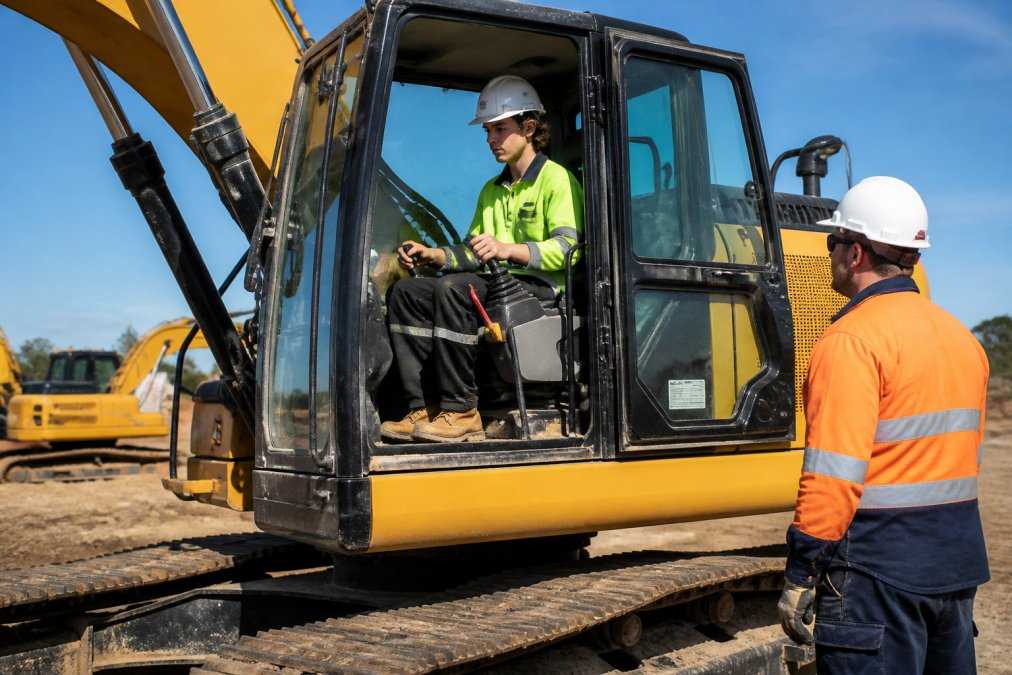
Types of Machinery Roles You Can Start With
The most common entry points are dump truck operator, water cart operator, roller operator, and skid steer operator. These roles typically require a single RII ticket and a White Card, making them the fastest route onto a site.
| Role | Typical Ticket Required | Best For |
|---|---|---|
| Dump truck operator | RIIMPO206 or equivalent | Complete beginners |
| Water cart operator | RIIMPO203 | Those with a car licence |
| Roller operator | RIIMPO317 | Civil construction work |
| Skid steer operator | RIIMPO318 | Landscape and tight-site work |
| Excavator operator | RIIMPO320 | Career progression target |
RII Ticket Training Costs: What to Expect and How to Budget
RII ticket training costs vary by provider, equipment type, and whether you book a single course or a package. Pricing depends on delivery method, group size, and whether you need extra seat time.
Package Deals and Price Matching
If you need two or more tickets, ask about bundled pricing. Most providers structure packages to reduce the per-ticket cost. A2B Training runs courses six days a week.
Book your White Card course first. Without it, no machinery ticket will get you onto a construction site, regardless of how many RII units you hold.
How to Get a White Card Before You Step on Site
The White Card is the non-negotiable starting point. It is the nationally recognised proof that you have completed general construction induction training under the model Work Health and Safety laws, and no commercial construction site will let you past the gate without one. Unlike a machinery ticket, the White Card is not optional and it is not role-specific, it applies to every worker on site, from the labourer to the excavator operator.
The Certification Sequence Most Guides Skip
Most job listings say “White Card required” and stop there. What they do not explain is the order in which you should collect your credentials so that you are actually employable. The sequence that works is:
- White Card first. Complete a general construction induction course with a registered training organisation (RTO). This is the prerequisite for everything else. Without it, holding five RII tickets will not get you on site.
- One entry-level RII ticket second. Choose a dump truck, water cart, roller, or skid steer unit. These are the units employers will accept from a candidate with no seat time.
- A VOC (Verification of Competency) third, once you have a job offer. Many employers require a VOC before they will let you operate a specific machine on their site, even if you already hold the ticket. The VOC is usually conducted on the employer’s equipment and confirms you can actually run that machine safely.
- A HR or HC licence only if the role needs it. Water cart and some dump truck roles on public roads require a heavy vehicle licence. Do not pay for this before you know the job needs it.
What the White Card Course Actually Involves
A standard general construction induction course runs for about one day, either face-to-face or via a combination of online theory and in-person assessment, depending on the provider. You will cover hazard identification, risk control, emergency procedures, and your legal duties under work health and safety legislation. Assessment is usually a written or verbal knowledge check plus a practical component.
Common Mistakes That Delay New Entrants
- Booking a machinery ticket before the White Card. Some providers will let you enrol, but you cannot legally work on a construction site until the induction is complete. Do them in the right order.
- Assuming the White Card expires. In most jurisdictions it does not have a fixed expiry, but some employers and sites require you to refresh it if you have been off site for a prolonged period. Ask the site before you start.
- Losing the physical card. Keep a photo of it on your phone and a copy in your wallet. Replacing it costs time and a fee, and you cannot start a shift without it.
Do not pay for a HR licence or a VOC until you have a job offer that specifies it. These are the two most common unnecessary expenses for new entrants.
Once the White Card is in hand, the next decision is which single RII ticket to buy. The section below on training costs and the role table above will help you choose the one that matches the work you actually want.
Construction Plant Operator Career Path: From Labourer to Operator
The construction plant operator career path usually starts with labouring. You learn how a crew operates and build basic site awareness that employers look for.
Day-in-the-Life of a Plant Operator
A typical shift starts with a pre-start check on the machine, a toolbox talk, and a review of the day’s scope. You’ll spend most of the day in the seat, coordinating with labourers and the supervisor, watching for hazards, and managing your own fatigue. On civil construction sites, you may switch between tasks depending on what the project needs.
Skipping the pre-start inspection is one of the fastest ways to get sent home. A missed fault can mean a breakdown mid-shift, and that’s on you.
No Experience Needed: How to Land Your First Machinery Job
Landing your first machinery job without seat time comes down to proving three things to an employer: that you are safe, that you are reliable, and that you can learn. The ticket gets you past the first filter. The application and the interview get you the start.
The Transferable Skills That Actually Matter
Most new entrants assume their resume is empty because they have never operated a machine. That is the wrong frame. Employers hiring for entry-level plant roles are not looking for machine hours, they are looking for the behaviours that predict a safe, low-maintenance operator. If you have worked in any of the following, you already have relevant experience:
- Warehouse or logistics work. Forklift operation, load restraint, and pre-start checks translate directly to plant operation. Say so explicitly on your resume.
- Farming or rural work. Tractor, telehandler, and small plant experience is highly regarded, even if it was not on a commercial construction site.
- Trades and labouring. If you have worked around heavy equipment, you understand site rules, exclusion zones, and the chain of command.
- Driving roles. A clean driving record and comfort with large vehicles signals you can handle a water cart or dump truck.
- Any role with shift work. FIFO and civil employers care about your ability to turn up on time for a 5am start, every day, for a full swing.
How to Apply So You Get a Call Back
- Apply directly to civil contractors and labour hire firms. Job boards are where everyone else applies. A short, direct email to a civil contractor’s office, with your tickets attached, can be an effective way to reach a supervisor.
- Lead with your tickets and your White Card. Put them in the first three lines of your resume. If a recruiter has to scroll to find them, you have already lost.
- Name the machine you want to run. “Seeking dump truck operator role” is stronger than “seeking construction opportunity”.
- Be available immediately. Entry-level roles are often filled by whoever can start first. If you can start tomorrow, say so.
- Accept a labouring role to get on site. The fastest route onto a machine is through the gate as a labourer with your ticket already in hand. Once you are on site, you may gain seat time.
What Employers Screen For at Entry Level
A common pattern among civil and mining employers is a short phone screen before any site interview. They are checking three things: whether your tickets are current, whether you have reliable transport to the site or the muster point, and whether you understand that the first six months will involve a lot of labouring and cleaning. Candidates who answer those questions honestly and without overselling themselves are more likely to move forward.
A common route onto a machine is through the gate as a labourer, with your ticket already in hand.
If you are changing industries, rewrite your resume around safety, reliability, and equipment you have touched, not around the job titles you have held.
FIFO vs Local Roles: Which Suits Entry Level Workers
FIFO roles pay more but demand more. You’ll work long swings, live in camp, and be away from home for weeks. For entry level workers, FIFO can be a way to build hours and savings, but it’s not for everyone.
Conclusion
The biggest challenge for new operators isn’t finding work. It’s getting the right tickets before you apply. Without a White Card and at least one RII ticket, most employers won’t consider you, no matter how keen you are.
Frequently Asked Questions
What’s the easiest construction job to get into with no experience?
General labouring and trade assistant roles are the most accessible entry points. These positions typically require only a White Card and a willingness to learn. Many workers start here, gain site exposure, then complete RII ticket training for machinery like excavators or skid steers. Labouring roles often lead to operator positions once you hold the relevant tickets and have demonstrated reliability on site.
How long does it take to complete RII training for machinery?
Most RII machinery courses run between one and three days, depending on the equipment type and your prior experience. Excavator and skid steer tickets often take two days, while dump truck and roller courses may be shorter. Assessment includes both theory and practical components. Some providers offer flexible scheduling, including weekend classes, so you can train around existing work commitments.
What certifications are required to operate heavy machinery in Perth?
You need a White Card for general site access, plus the relevant RII ticket for each machinery type you intend to operate. Common tickets include excavator, loader, dump truck, roller, and telehandler. Some roles also require a heavy vehicle licence if you’ll be driving machinery on public roads. Verification of competency may be required by employers to confirm your skills match the ticket.
Are excavator operators in demand across Western Australia?
Yes. Infrastructure projects, civil construction, and mining operations across Western Australia continue to create steady demand for machinery operators. Entry level construction machinery jobs in Perth often appear in civil works, landscaping, and rail projects. Holding multiple tickets, such as excavator and loader, improves your chances of securing full-time work and can lead to higher hourly rates.